Archive record. casahacker.org/tratamentodedados — Squarespace, 2019-2021. 2 section(s), 2 images.
Data Handling Activity Book
A collection of playable exercises for civil society organisations that work with the personal data of human-rights defenders, researchers, activists and beneficiaries of public-interest work.
A resilient civil society protects its citizens’ data
Organised civil society works directly with personal data, or with tools that create and collect personal data — through mailing lists, on social media, when planning events, in monitoring and evaluation, when organising demonstrations, creating petitions and fundraising. Right now, while many people are working from home or travelling less, organisations are running online campaigns and interacting more with tools that collect personal data.
The Data Handling Activity Book is a self-learning resource from Tactical Tech’s Data and Activism project in partnership with Casa Hacker. The book is a collection of playable, interactive exercises for civil society organisations that work with the personal data of human-rights defenders, researchers, activists and others involved in social action.
It is important to understand the ways personal data can easily be accessed by others. As an organisation, manager or producer, you may depend on tools that are not encrypted, or on platforms that collect personal data or share it with third parties. These data-driven tools can be used to identify people, their actions and their locations — and in certain circumstances they can put people at risk.
While there are tools for individuals to protect their own privacy, it is also important for organisers to take care with the data they collect or create about others. It can be hard to know where to start, which standards to follow or which tools to use. There is no single right or wrong answer: each organiser must balance their needs, the risks of the people they work with, and the tools available.
The book offers fun, interactive exercises to help organisations reflect on and learn about the risks and potential benefits of using personal data. The activities will help you build Your Data Policy: a practical, personalised guide for individuals, organisations or partners.
The first part is a journey through organising events — talks, workshops, courses and other common activities run by organisations across Brazil. Even though we are travelling less, many people are planning and running online events, and others are organising their return to in-person ones. There are considerations not only for travel, but for the online registration and promotion platforms of these events, which deserve careful thought about any organiser’s personal-data practices.
Download the book and start now
Pick a chapter to start, click to download, print the book or read it on your computer or smartphone, and use a draft to build your data policy.
Chapter 1 | An introduction to personal data and events
Chapter 2 | Event registrations and participants’ data
Chapter 3 | Travel and our data luggage
Chapter 4 | Social-media data and promoting your event
(+) More resources
LIVE: Data Protection and Civil Society Organisations, with Casa da Cultura Digital Poa
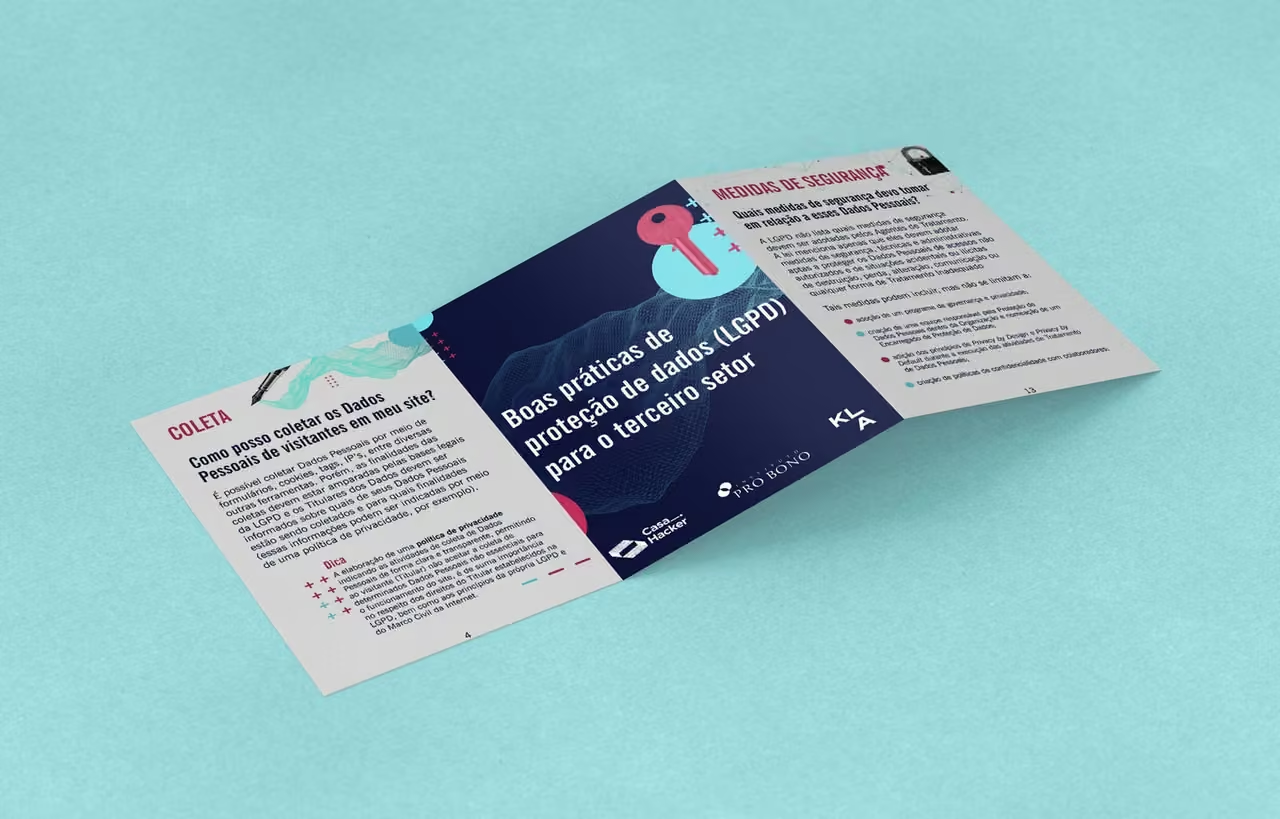
Booklet: Good data-protection practices (LGPD) for the third sector
Your opinion
We want to hear from you! What did you think of the book — any questions or recommendations to share? Talk to us.
Credits
This project is a collaboration of Amber Macintyre, Ida Flik, Leil Zahra, Christy Lange, the Tactical Tech team, and Talita Soares as translator of the Brazilian production by Casa Hacker. The Organiser’s Activity Book is based on the applied research of the Data and Activism project, examining the impact of data collection and profiling on human-rights defenders, civil-rights organisations and networks.
Produced in partnership with