// module12 sessions
Mobilisation: Art and Technology
urban art and AI in the quebrada
How do you use graffiti, Virtual Reality and Artificial Intelligence to tell the story of your own territory?
Urban ArtVirtual RealityGenerative AI
A club for technology, art and invention inside the public school — and free of charge. Here young people do not sit through a lesson: they pick up the spray can, the Arduino, the 3D printer, VR and AI to solve a real problem in their own neighborhood. Seven hands-on months, from the first creative jam to the Festival stage.
Hackerclubes are creative spaces where urban art, technology and young people meet to hack social inequality with innovation and agency. Made from the periphery for the periphery — we want to build cities that are smarter, more diverse and more inclusive.
When young people create a new reality — with graffiti, sensors, 3D printing, AI and code — they are hacking social inequality. These are our clubs: alive, real, rooted in the territory.
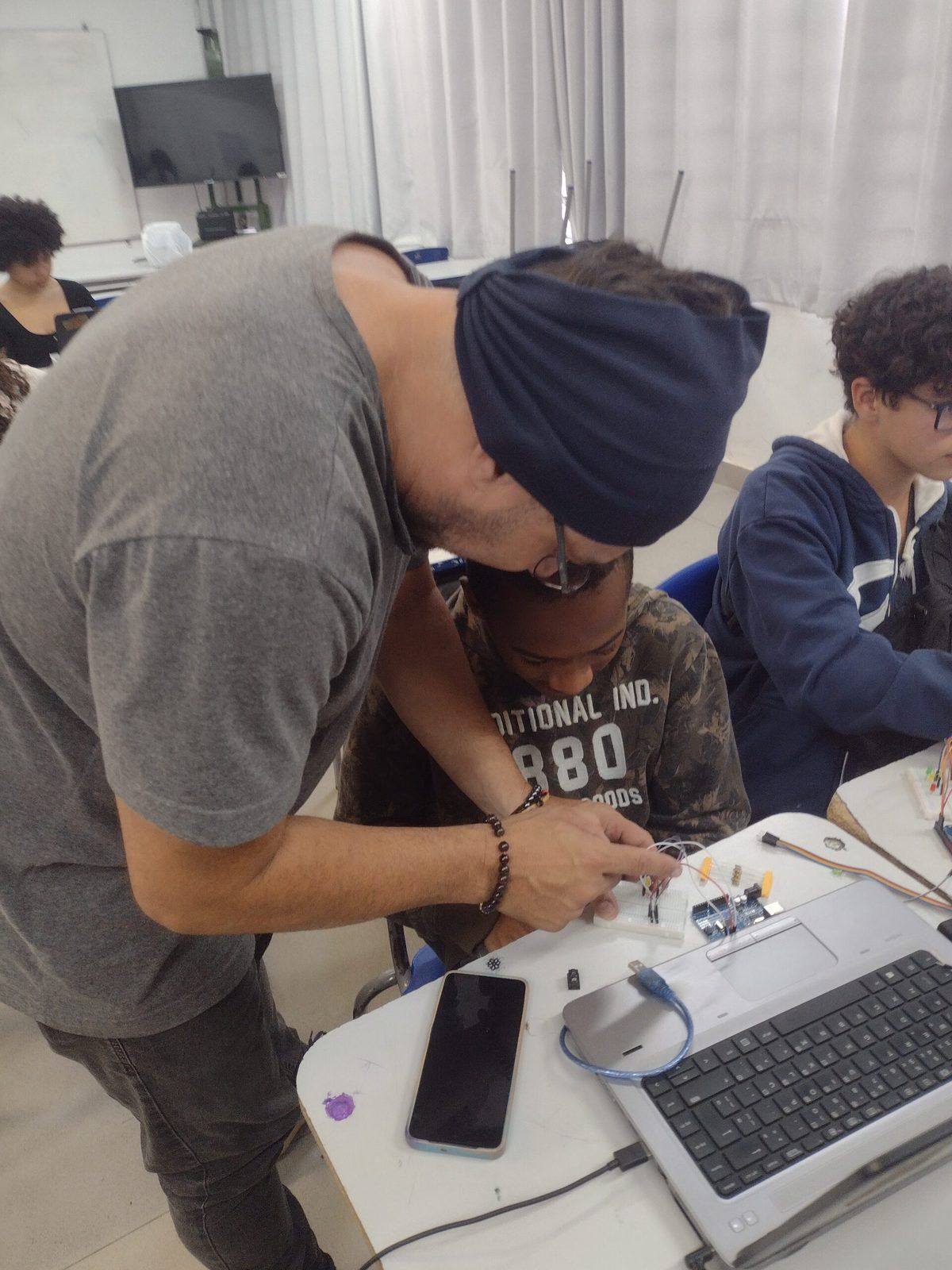
A 7-month journey of weekly workshops, from urban art to digital fabrication, ending in a hackathon and the Festival Hackerclubes.
The history of artistic expression in the peripheries and in urban movements.
Cultural influence, urban art and territorial identity.
Spray, stencil and digital illustration techniques.
3D modelling and printing — from code to physical object.
Electronics, sensors, Arduino and LEDs: hardware in the service of art.
Real urban intervention: prototype, narrative, impact on the territory.
The projects presented publicly to the community, families and partners.
Casa Hacker’s STEAM curriculum base: 6 modules in which each group develops a real project with impact on its own territory — from the problem to the invention.
urban art and AI in the quebrada
How do you use graffiti, Virtual Reality and Artificial Intelligence to tell the story of your own territory?
the smart city is not the future — it is now
How do you solve traffic chaos with electronics? An automated traffic light, a DC-motor cart, a barrier gate with a presence sensor.
heat islands in the periphery are climate injustice
How do you measure, denounce and fight extreme heat in your neighborhood with technology and artivism?
zero waste starts in your own neighborhood
How do you build a leak detector and create an educational video with AI, in the style of "PIX", about privacy and water?
food security starts in the vegetable garden
How do you automate a vegetable garden with a soil moisture sensor, 3D modelling and a website to spread the word?
from prototype to public presentation
How do you create a working prototype that solves a real problem in your territory, and present it to the community?
A dangerous junction in the neighborhood became a prototype for an automated traffic light with sensors.
from the Sumaré group →A graffiti panel that gains layers in augmented reality, telling the story of the territory.
from the Sumaré group →Mapping the neighborhood’s heat islands with temperature sensors and artivism posters.
from the Americana group →A community garden with a soil moisture sensor and a website built by the group itself.
from the Nova Odessa group →Seven hands-on months lead into a hackathon and the Festival Hackerclubes: the kids take the stage and show the whole community what they have built — from graffiti to app, from sensor to urban intervention.
This is not a science fair, it is a launch. A project that takes the stage is a project that starts existing in the world. It is where the periphery states plainly that it is tech, it is pop, it is art — and that inventing your own future is serious business.
numbers measured and published — see the report Our Impact 2022-2025 →
Geraldo Barros
Programme Coordinator
Founder of Casa Hacker, he has worked with young people from the periphery and with maker education for more than 8 years.
Amanda Santos
STEAM Programmes Manager
A specialist in STEAM education and in active methodologies for young people in situations of vulnerability.
Aliene Villaça
STEAM Pedagogical Coordinator
Pedagogue and facilitator focused on maker curriculum, creative electronics and art education.
It is Casa Hacker’s network of clubs for technology, urban art and social innovation, made from the periphery with the periphery. In every unit, young people learn to build, test and launch projects that hack the inequalities of their own territory.
Secondary school students (in partnership with schools). Places prioritise those with a household income of up to half the minimum wage per person (or up to 3 minimum wages in total), and 50% of places are reserved for diversity and inclusion, going to under-represented groups — Black people, women, LGBTQIA+ people, people with disabilities and ethnic minorities.
Each edition runs for 7 months with weekly workshops — and closes in style: a Hackathon and the Festival Hackerclubes, with the projects presented publicly to the whole community.
Nothing. It is free — it always has been. The programme is sustained by partnerships with schools, social investors and organisations, so that money is never a barrier.
If you are a young person, use the "I want to take part" button on this page and we will point you to the unit closest to you. If you are a school, an organisation or a social investor and want to open a Hackerclube in your territory, get in touch at falae@casahacker.org.
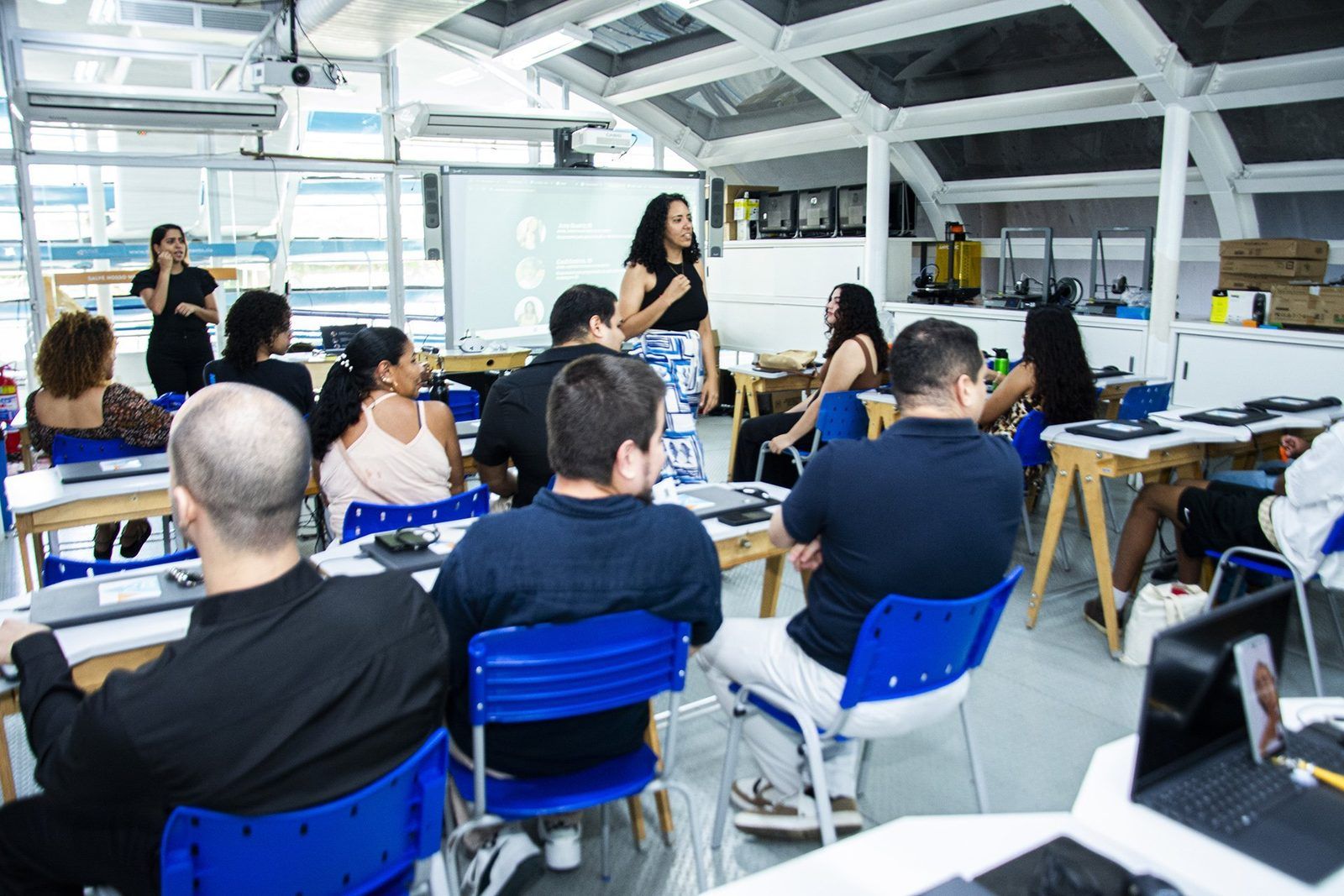
At Casa Hacker, meetings between educators create spaces to share experiences, challenges, activities, and lessons learned in the classroom. Through these exchanges and reflection on their own practice, educators expand their repertoires and collectively build new possibilities for STEAM education work.
The participation of Hackerclubes students in the II InterCOCEN Science Fair brought classroom learning closer to the research developed at Unicamp. The experience expanded the students' repertoire regarding the applications of technology and helped bring the university closer to their future possibilities.
At Hackerclubes, creativity is used as a pedagogical tool to bring students closer to technology and stimulate autonomy, experimentation, and expression. Classroom experience shows how STEAM education can create spaces for students to not only learn how to use technologies, but also develop their own ideas and solutions.