
Our Theory of Change
Our reading of the world is that we need to challenge the structures of inequality that shape access to digital technologies in Brazil, turning them into tools of real empowerment for everyone.
As an organisation dedicated to social innovation, we have seen up close how the advance of the internet – which reaches 90% of Brazilian households – does not translate into genuine inclusion, leaving 7.28 million homes without a fixed connection and 76% of the population without basic digital skills, according to ANATEL data.
It is in this contradictory scenario that we built our Theory of Change: not as a linear map, but as a living narrative of collective action that reconnects people from the periphery to the transformative power of technology. Picture a country where urban connectivity is exploding while the peripheries stay isolated: that is the Brazil that moves us. We start from that reality to explain, step by step, why our strategy focuses on shifting power dynamics, enabling communities to lead their own transformations. We will unpack this plainly, the way you would tell a piece of field reporting, full of concrete facts and lessons learned in the territories.
Our journey began by mapping the cracks in the Brazilian system. We observed that, despite 90% internet access, only 24% of Brazilians have a command of basic digital skills – a chasm that perpetuates exclusion from financial services, health care and employment. It is as if the digital revolution were passing millions by, deepening the economic, educational and social inequalities we fight every day.
To illustrate: 12.4 million people live in extreme poverty, 8.1 million are unemployed, and 59% of homes have no computer, creating barriers that run from information to political participation.
Add to that insufficient public investment: Brazil spends only US$ 2,525 per student on education and US$ 1,290 per inhabitant on science and technology – the lowest among 15 comparable countries, according to the Brazilian Society for the Advancement of Science. We saw that this scarcity holds back national innovation, while the private sector projects R$ 510,5 billion in technologies such as cloud and AI by 2025, requiring 570 thousand qualified professionals on salaries 2.6 times above average.
That discrepancy put us on alert: without inclusive training, the technology boom benefits few and leaves peripheral territories behind. In short, our context is one of urgency: digital exclusion is no accident, but a symptom of concentrated power that denies communities the tools of change. As active witnesses, we use this data to justify a strategy that works from the ground up, encouraging territorial leaders to create territorial solutions.
Our Theory of Change is not abstract theory; it is our belief, built out of real experience, that transformation comes from collective action, not from top-down impositions. We understand change as complex and interconnected, far from tidy boxes – a view that leads us to put power at the centre of injustices such as discrimination and digital violence.
First, we recognise that power sustains exclusion but can be rebalanced by grassroots movements. Second, we believe peripheral territories hold wisdom of their own for their development. Third, we invest in close connections – in person or digital – to generate representation. Fourth, we value permanent teams and grassroots organisations as engines of impact. And fifth, we secure accessible infrastructure so that ideas can flourish.
We chose three areas for our work – Digital Inclusion, STEAM Education and Social Innovation – because they respond directly to the context of scarcity and demand we have described. In Digital Inclusion, we develop initiatives for every age group and turn them into decentralised social technologies, so that the 76% without basic skills are not left behind.
In STEAM Education, we focus on young people to cultivate scientific thinking and sustainable technologies, countering low public investment while preparing them for the 570 thousand openings in IT. In Social Innovation, we encourage territories to lead local solutions, strengthening entrepreneurship and access to spaces of power. By bringing inclusion, education and innovation together, we shift power dynamics systemically.
The path to impact
- context
Digital exclusion is no accident
90% of households have internet, but only 24% of Brazilians have a command of basic digital skills; 7.28 million homes without a fixed connection and 59% without a computer. Low public investment, demand for 570 thousand IT professionals.
- beliefs
How we believe change happens
- Power sustains exclusion but can be rebalanced by grassroots movements;
- peripheral territories hold wisdom of their own for their development;
- close connections — in person or digital — generate representation;
- permanent teams and grassroots organisations are engines of impact;
- accessible infrastructure makes ideas flourish.
- areas of work
Digital Inclusion · STEAM Education · Social Innovation
Decentralised social technologies for those left behind; scientific thinking with young people; territories leading local solutions.
- short term
Results we have already measured
Social technologies tested and documented; resources mobilised through tax incentive laws; entrepreneurial leaders trained.
- long term
What we want to see happen
Organisations implementing our practices, governments adopting affirmative gender and race policies, ecosystems funding local impact.
- impact
Digital technologies accessible to everyone
Citizens able to transform territories and influence power.
Our implementation mobilises resources such as our experienced team, partner networks and advocacy in public policy, monitoring federal committees for greater investment in science and technology. In the short term, we test and document social technologies, mobilise resources through tax incentive laws and train entrepreneurial leaders. In the long term, we see organisations implementing our practices, governments adopting affirmative gender and race policies, and ecosystems funding local impact. In our ultimate vision, the impact is: digital technologies accessible to everyone, and citizens able to transform territories and influence power.
By 2025 we had arrived at a model of consolidated programmes for transforming territories and developing leaders which, although reporting annual results, already show medium-term impact. Since 2021 we have evolved the way we do STEAM education with territories, schools and partner civil-society organisations: Minas em Tech and Hackerclubes are the real models we forged, refined, got wrong and got right — social technologies tested and documented for future replication and scale. In Digital Inclusion we advanced by transferring the Inclusão Tech social technology to more than 5 organisations, moving into medium-term strategies. In the coming years we want to scale the STEAM education programmes to a broad network of partners still to be built.
Social technologies tested and documented for future replication and scale.
— Geraldo Barros · Executive Director, Casa Hacker
STEAM Education, Sustainability and Peripheries
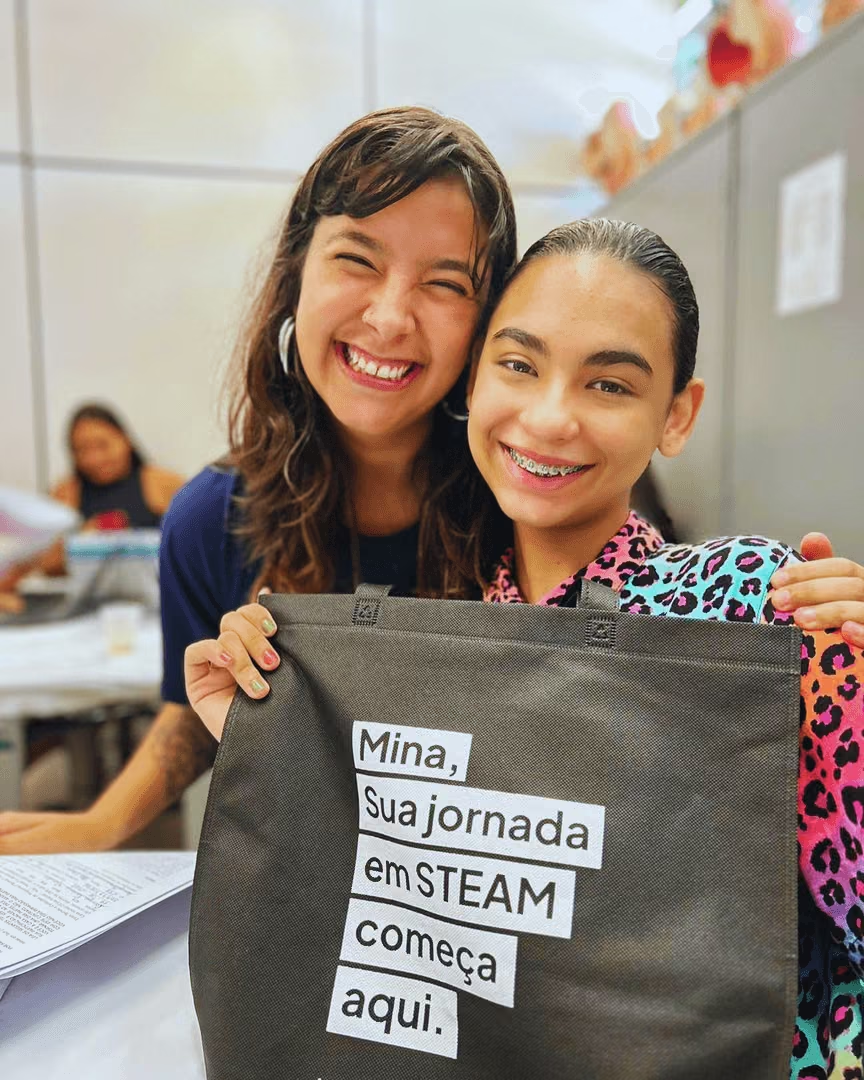
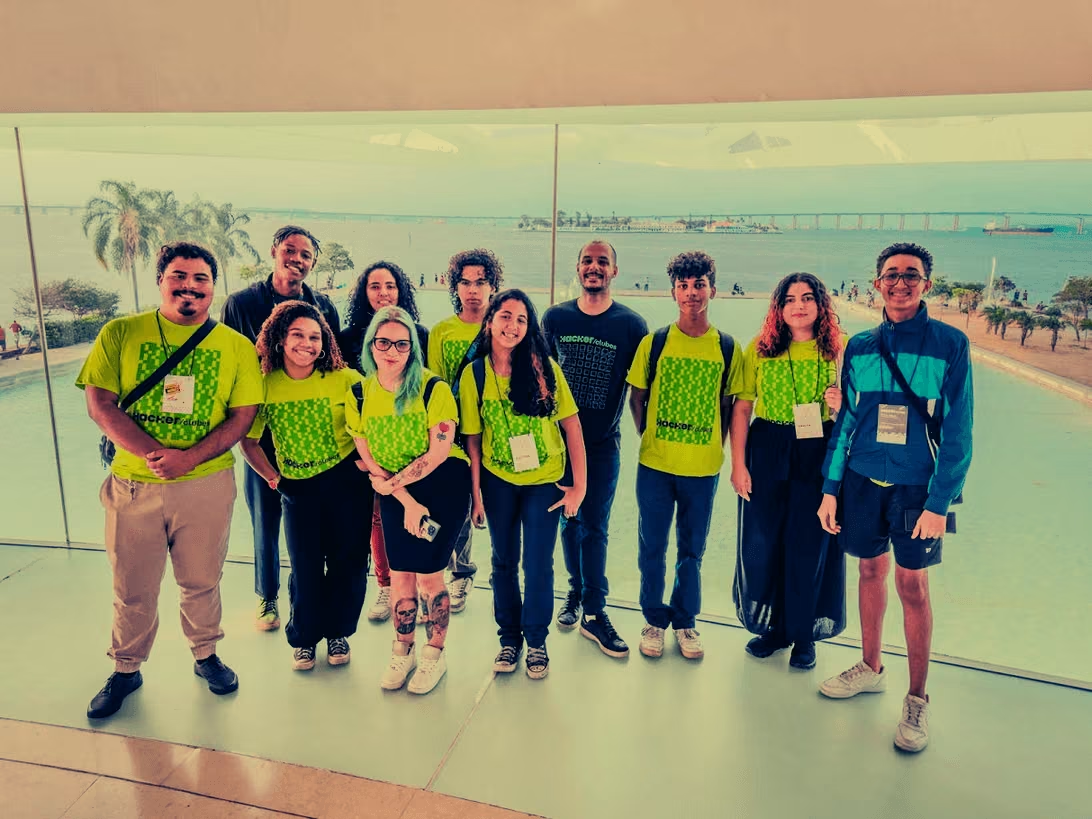
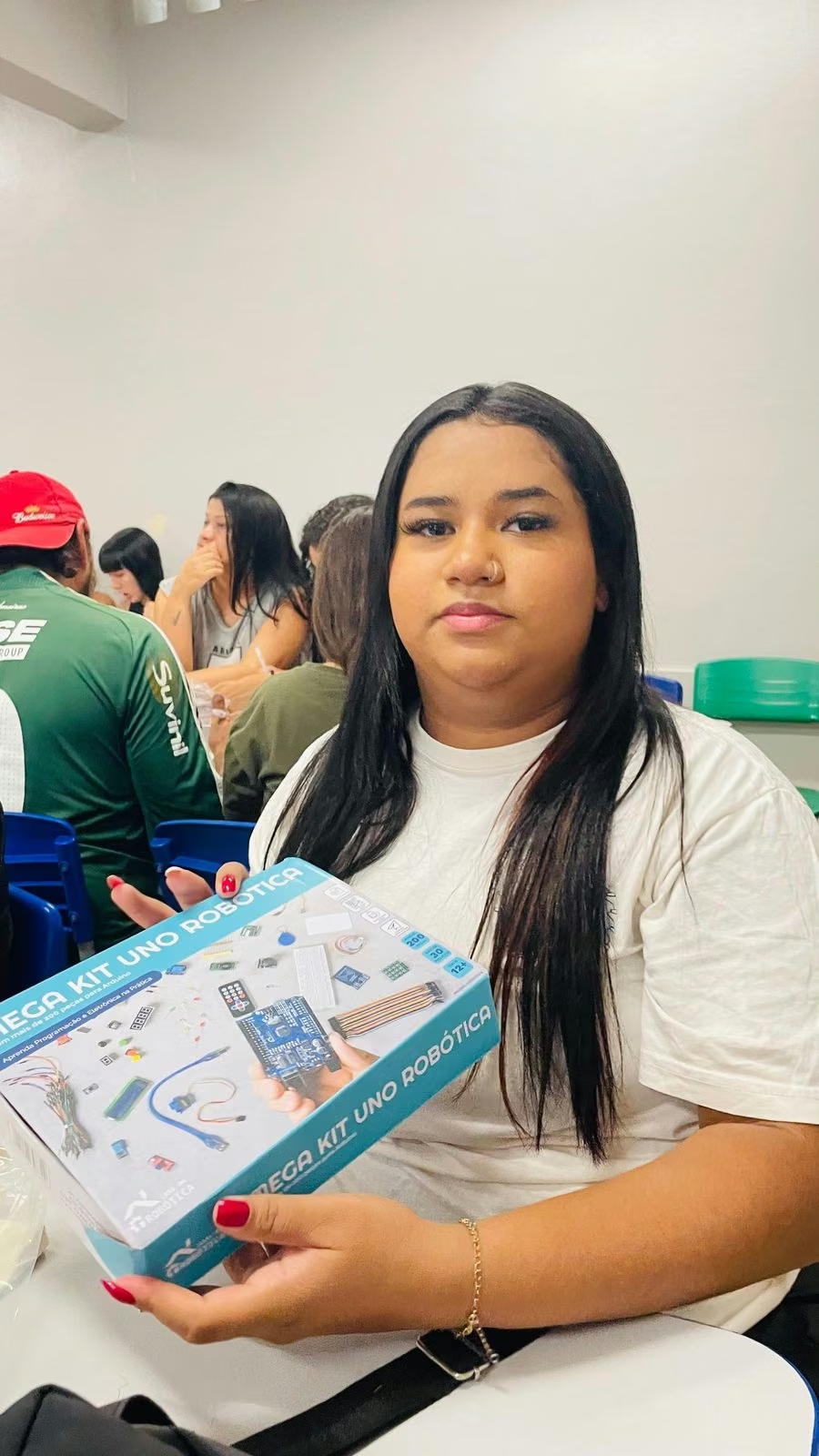
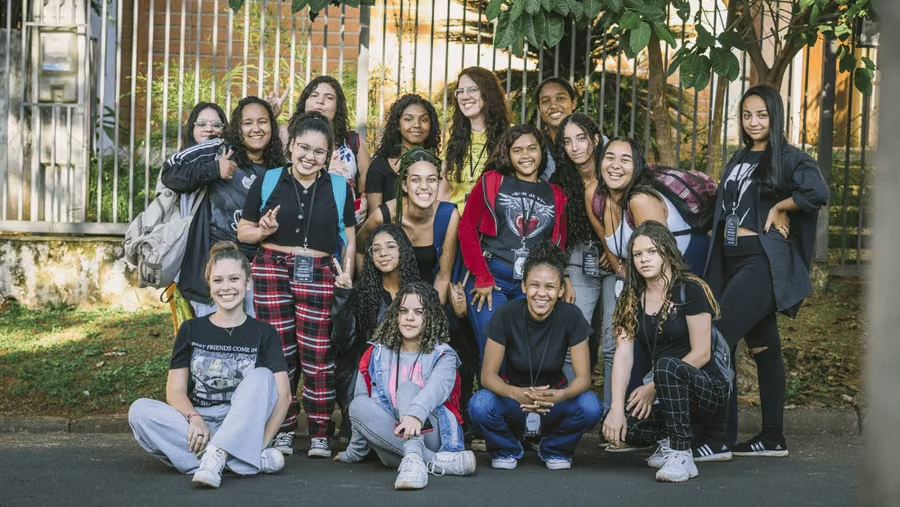
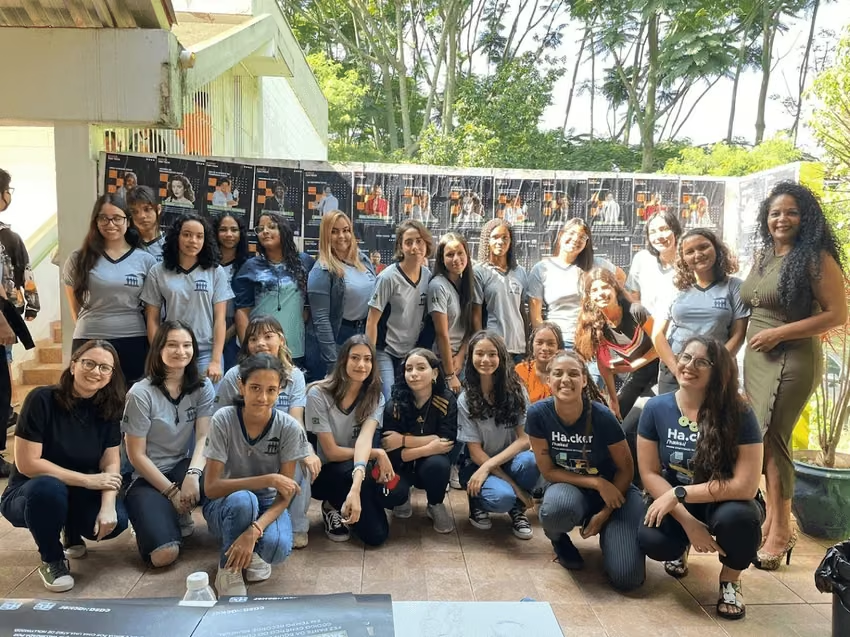
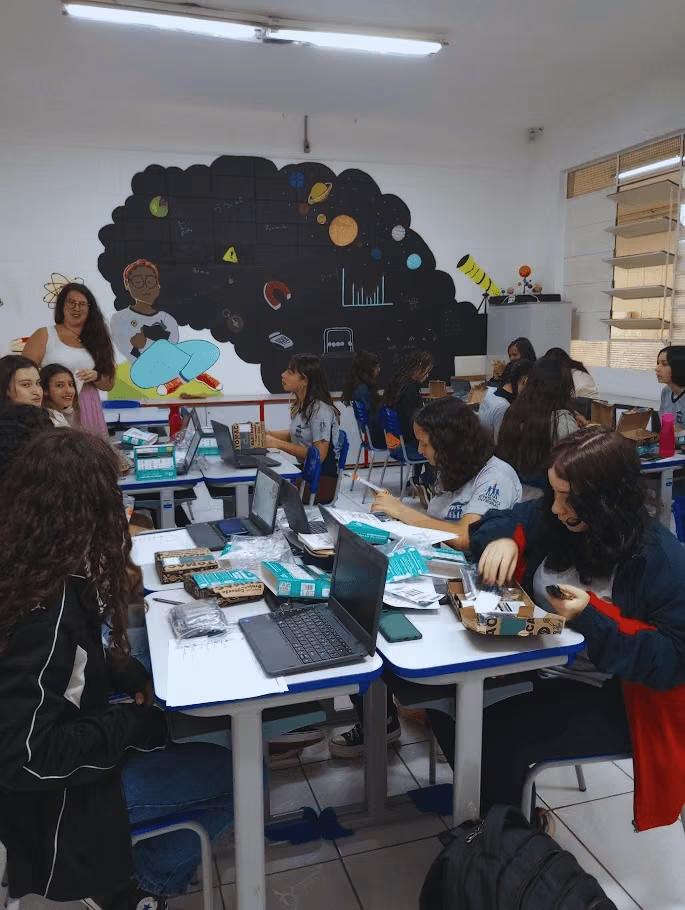
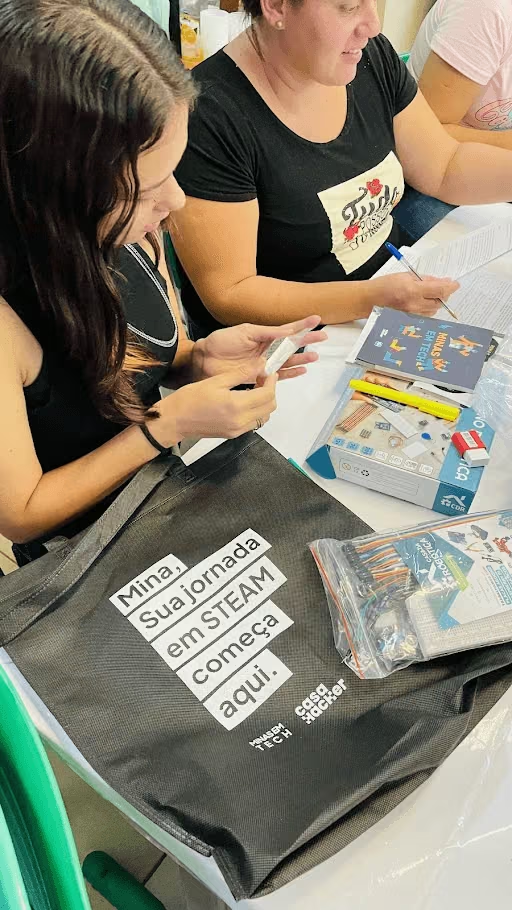
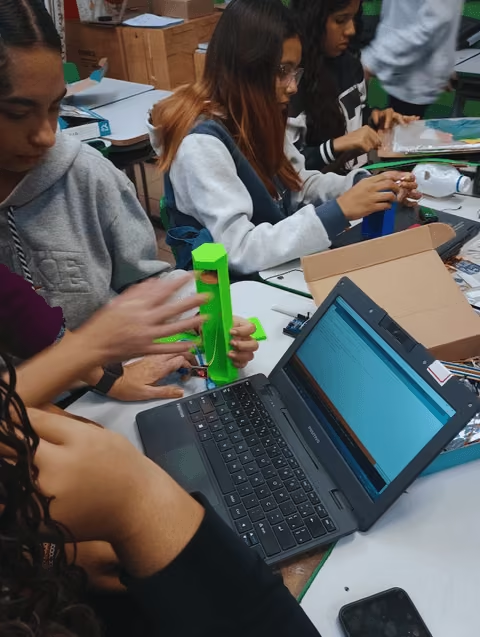
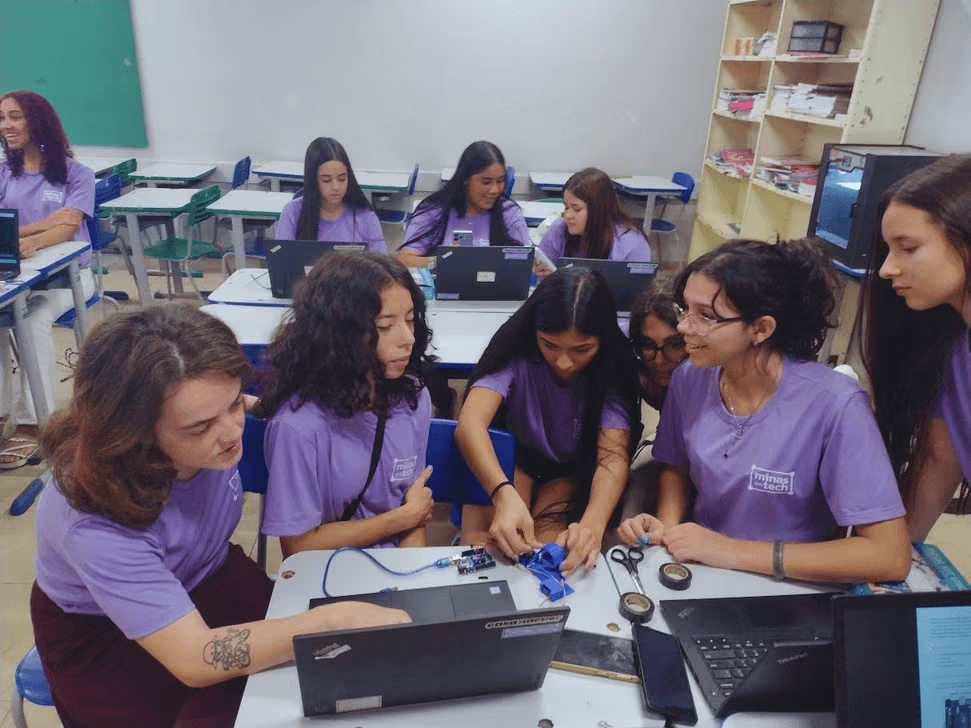
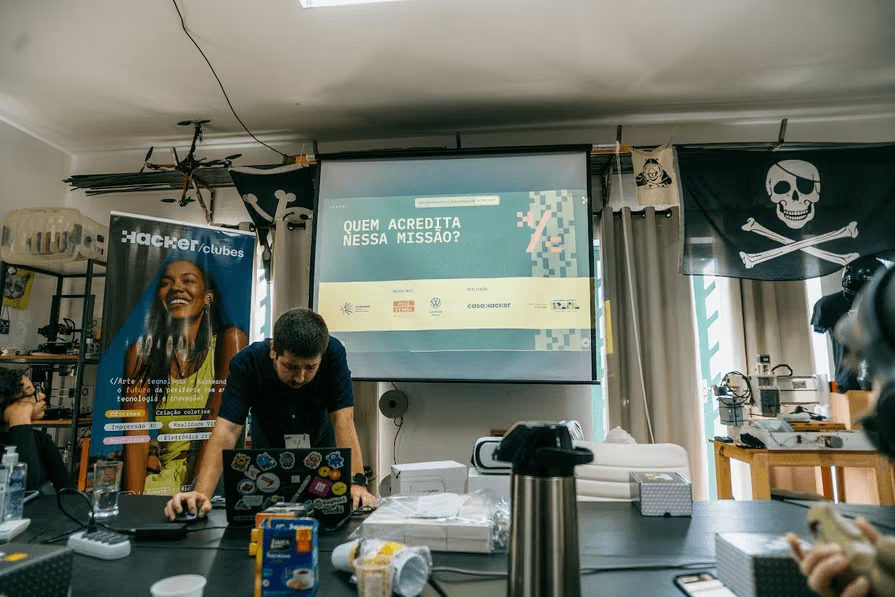
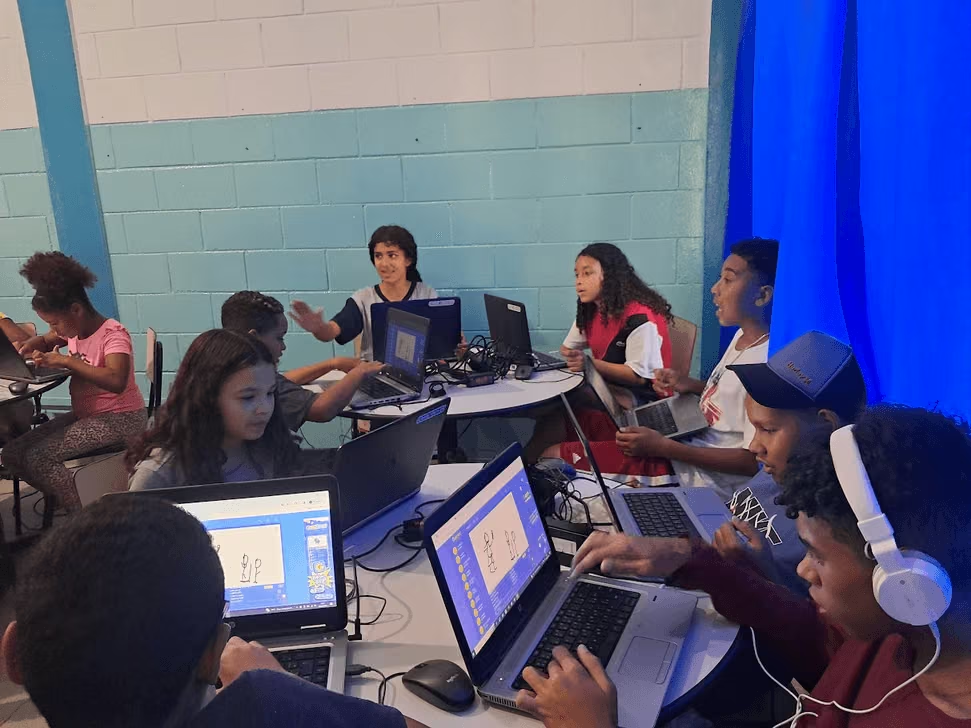
The Hackerclubes and Minas em Tech education programmes were our main fronts in STEAM education (Arts, Sciences, Technology, Engineering and Mathematics) which, from 2022 to 2025, engage young people from the peripheries in hands-on, creative learning journeys.
The initiatives build STEAM skills and competences, strengthen peripheral youth identities, role models and agency, connecting the knowledge of the territories with emerging technologies to develop impact solutions that address local needs through science, technology, creativity and the visual arts.
We create spaces for technology, the arts and innovation in the territories with the support of regional partners.
We offer STEAM learning tracks of roughly 100h–350h a year, spread over 2–3 sessions a week covering systems programming, electronics, 3D printing and modelling, virtual reality (VR) and artificial intelligence.
We run innovation challenges prototyping technology-based MVPs aligned with the Sustainable Development Goals.
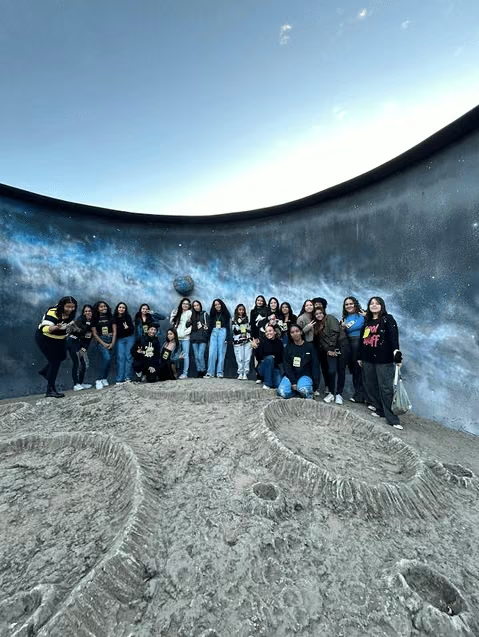
We visit science, technology and innovation venues such as Sirius at CNPEM, the Jean Nicolini Municipal Observatory of Campinas and the Brazilian Creative Learning Conference.
We build equipment infrastructure with 3D printers, VR headsets, electronics kits, sensors and other resources and making materials for developing projects.
Technical cooperation with the British Council for training and professional development.
In partnership with the British Council, our professionals took part in the “Women in Tech” programme. The training was dedicated to women in Science, Technology, Engineering, Arts and Mathematics (STEAM), with the aim of developing leadership competences and interpersonal skills to accelerate their careers. It covered crucial themes such as self-knowledge, diversity, mentoring and conflict transformation.
Taking part in this programme reinforces Casa Hacker’s commitment to gender equity and to strengthening women’s leadership, equipping our team to build a more diverse and innovative technology ecosystem. As one of the institutions selected to replicate the methodology, Casa Hacker took on the responsibility of disseminating what it learned, actively contributing to the formation of a new generation of women leaders in Brazil’s technology sector.
In the Minas em Tech programme specifically, participation was exclusive to groups under-represented in technology, mostly women and girls, who in fact accounted for all available places from 2022 to 2024.
People reached
see the data as a table
| Year | People reached |
|---|---|
| 2022 | 20 |
| 2023 | 45 |
| 2024 | 60 |
| 2025 | 125 |
Projects developed by the participants
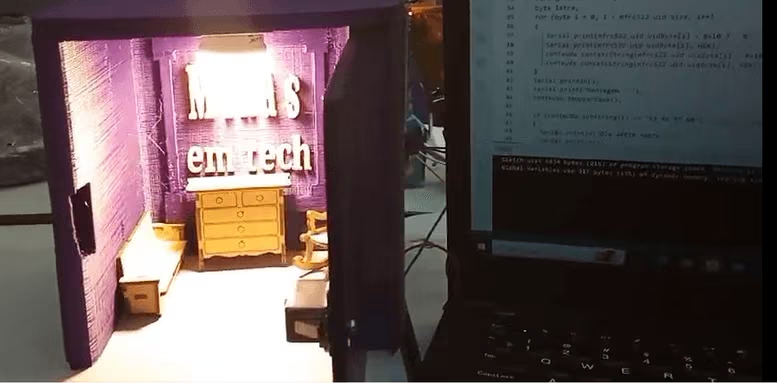
Residents’ Village — Livia · Karolina · Aryane · Geovana · Karina
Building a sustainable village where residents swap their recyclables for food from the vegetable garden, and also look after it. The project is responsible for building the farm houses, focusing on safety and lighting efficiency, plus a monitoring system to detect and prevent fires, minimising environmental risk and loss.
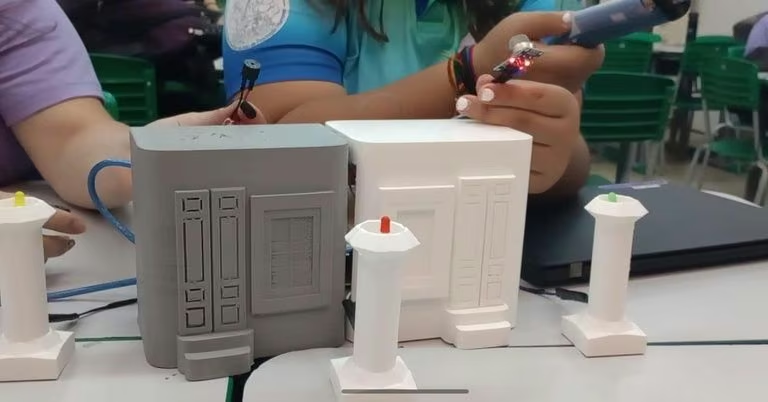
Sustainable Farm House — Heloisa · Leticia · Joyce · Maria · Lorraine
Developing a model house for the other homes on the farm. This house will feature innovative technologies such as tag-controlled entry and exit locks, sound-sensor lighting and a solar-powered illuminated pool.
Farm Monitoring Cart — Wall-E — Camila · Gabryelli · Nicole · Ana Clara
Creating an automated cart to monitor the farm environment. It will be equipped to measure humidity, temperature and rainfall levels, sending all the information in real time to an LCD monitor.
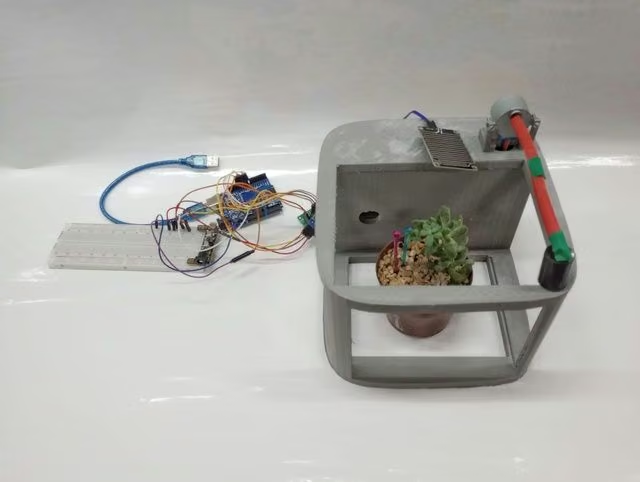
Vegetable Garden Irrigation Control — Samyra · Ana Vitória · Eduarda · Ana Julia · Iza Maria
Designing an automated irrigation system for the vegetable garden and building a greenhouse that closes automatically in heavy rain, protecting the crops.
Where it happens
-
Sumaré · SP — Escola Estadual Luiz Campo Dall Orto Sobrinho
-
Sumaré · SP — Escola Estadual Maria de Lourdes Martins
-
Sumaré · SP — Sociedade Beneficente São Judas Tadeu
-
Sumaré · SP — Escola Estadual Wadih Jorge Maluf
-
Campinas · SP — Laboratório Hacker de Campinas
-
Campinas · SP — Escola SENAI Prof. Dr. Euryclides de Jesus Zerbini
-
Campinas · SP — Instituto Federal de Educação, Ciência e Tecnologia de São Paulo — Campus Campinas
-
Rio de Janeiro · RJ — Nave do Conhecimento da Penha
Support: British Council
Sponsors: Avanade · Kyndryl · PPG · Coca-Cola FEMSA · VW Caminhões e Ônibus · Instituto Cacau Show · Desktop
Tax incentive: Lei Rouanet · Government of Brazil — Ministry of Culture
- Only Hackerclubes received support under the National Culture Support Programme.
Programme record
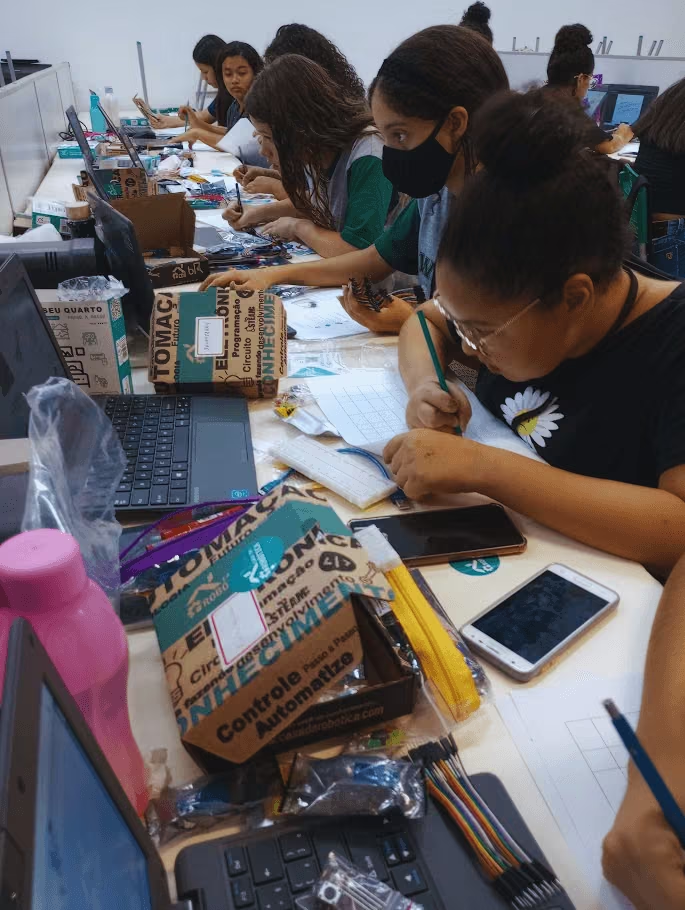
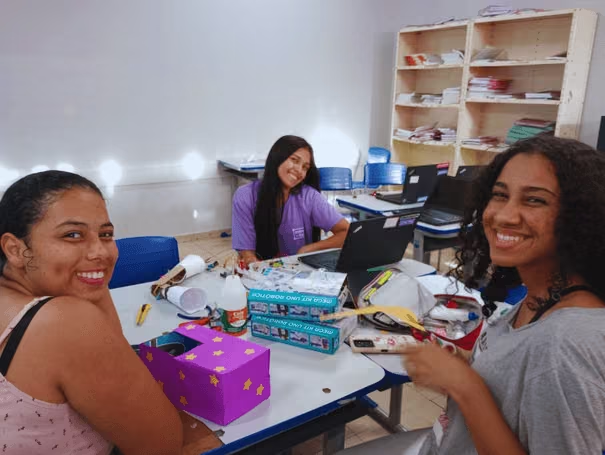
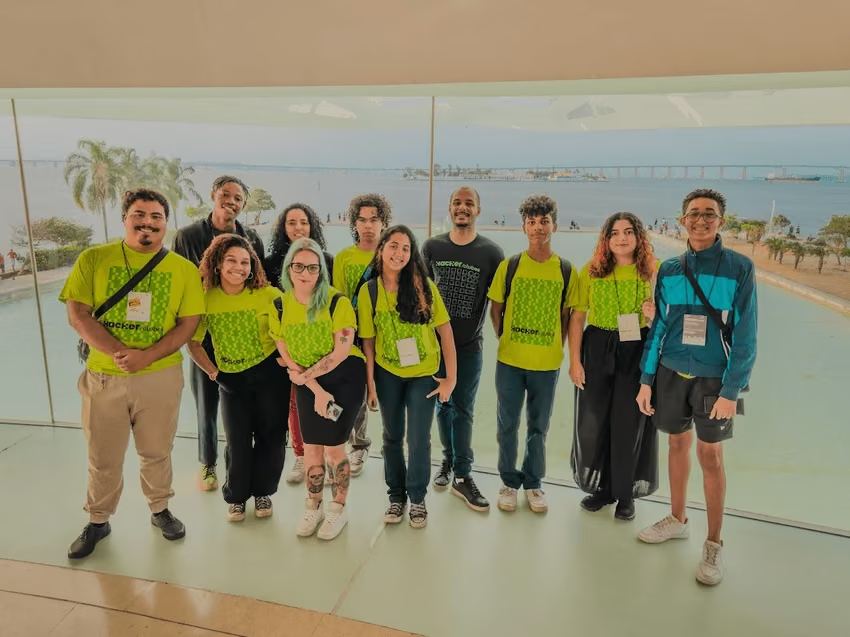
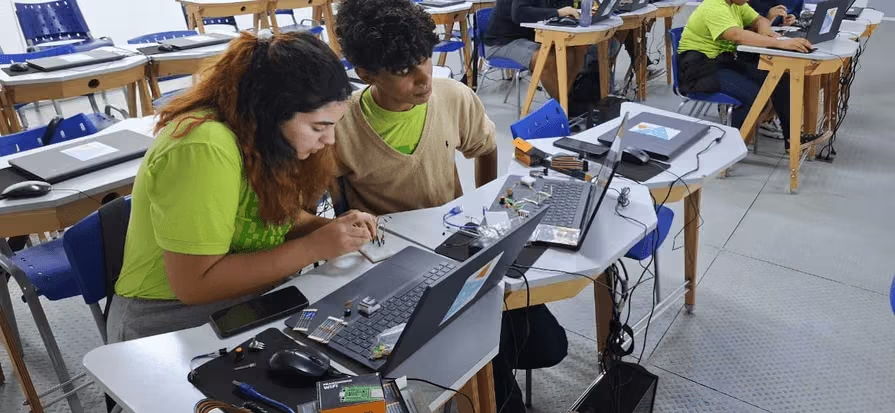
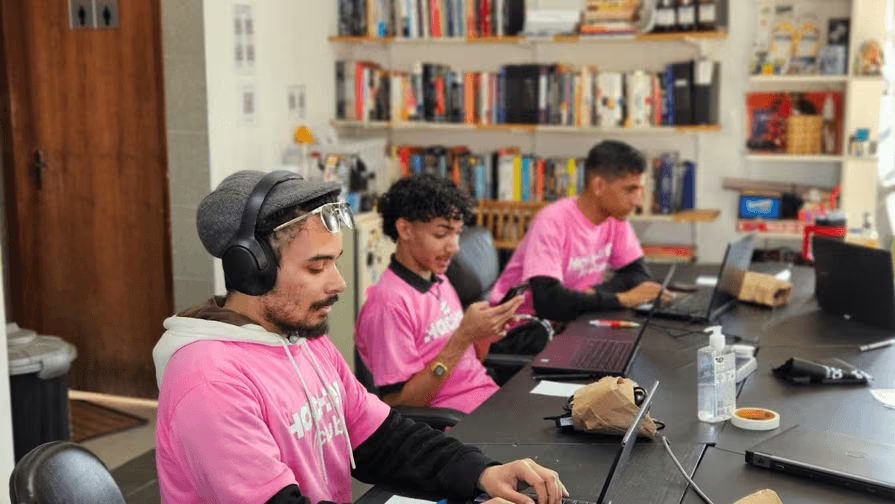
Digital Inclusion and Basic Digital Education
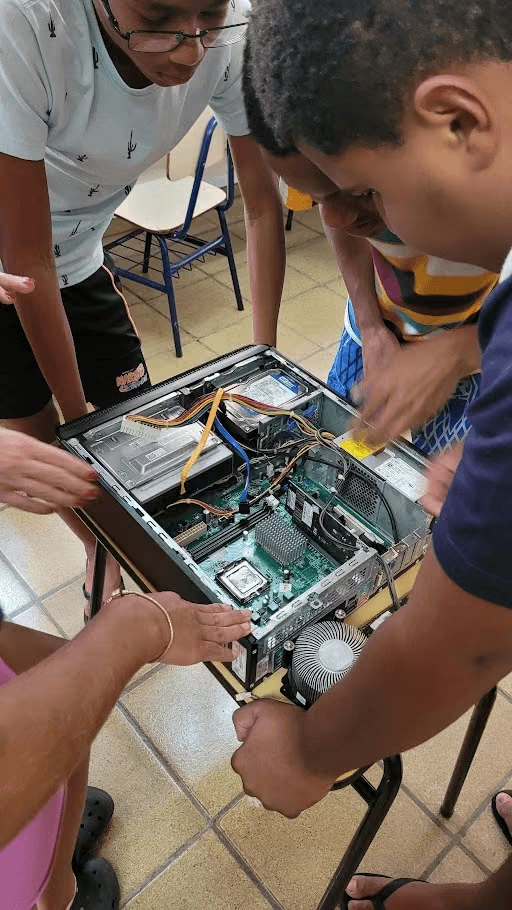
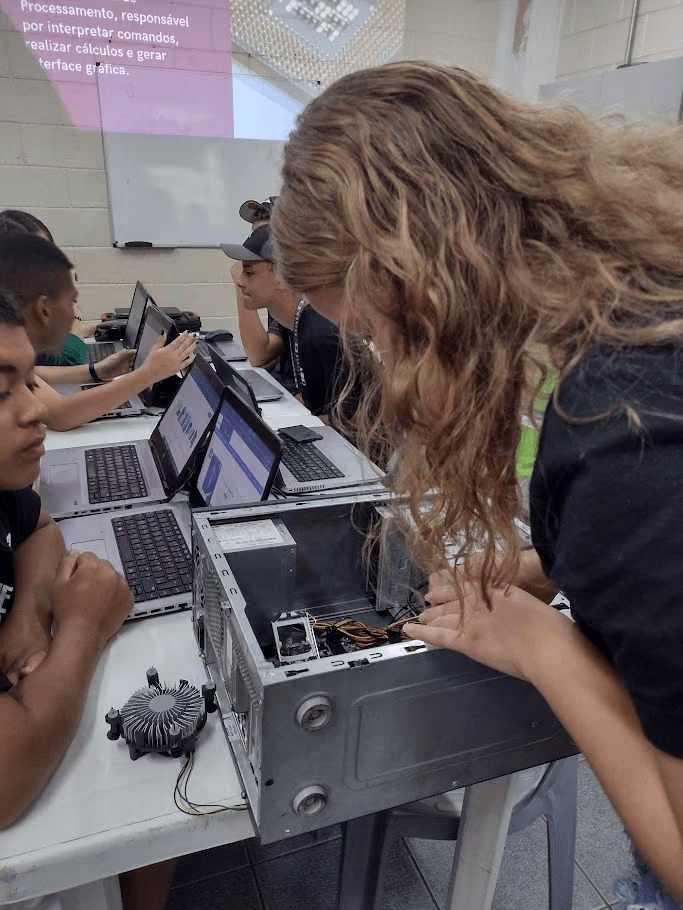
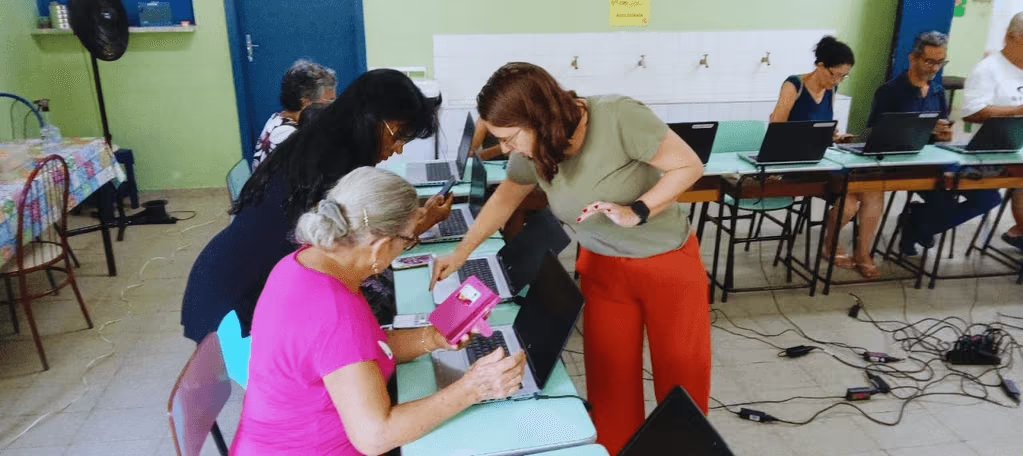
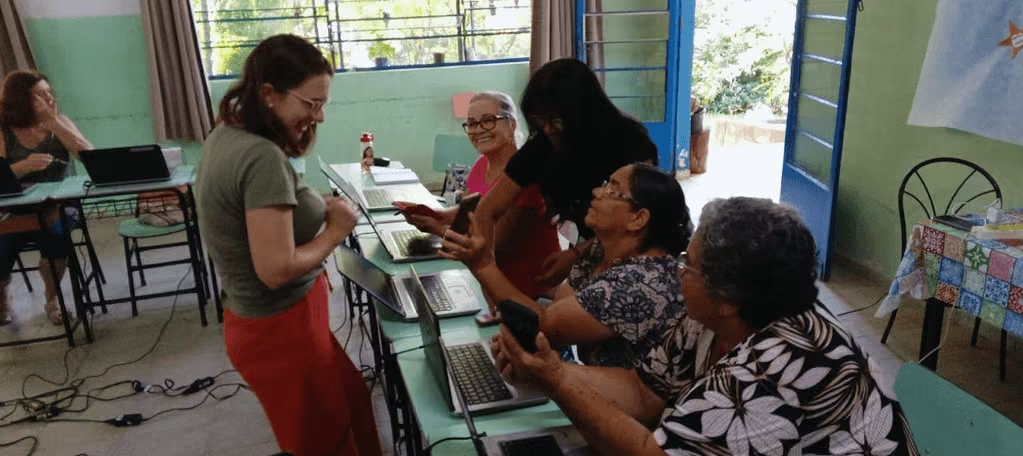
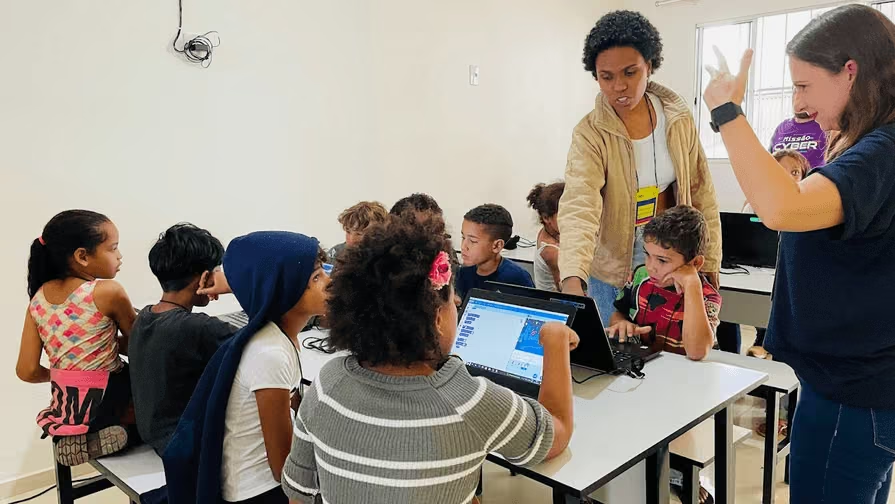
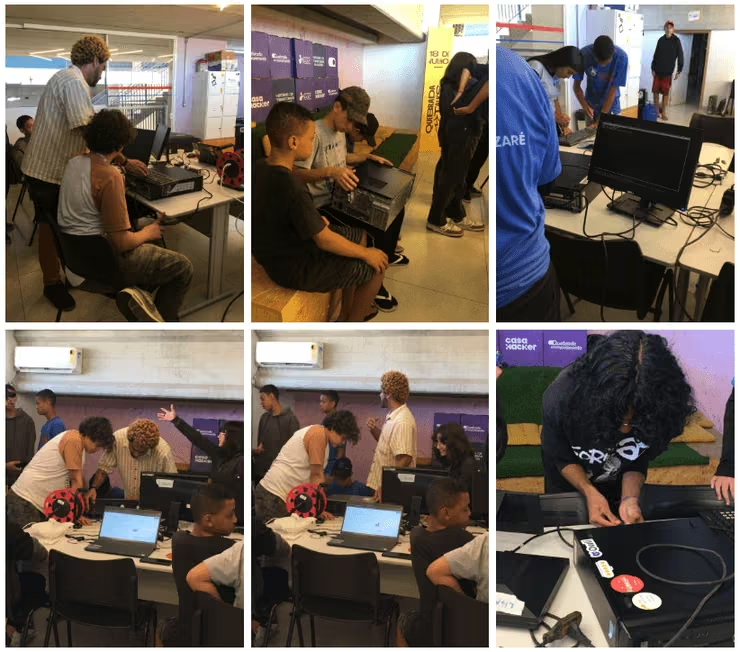
The Redes Conectadas, Bytes de Mudanças, Exploradores da Quebrada and Oficinas de Hardware programmes were our main fronts in digital inclusion and basic digital education which, from 2023 to 2025, provided basic technology training for people at their first contact with a desktop or laptop computer.
The initiatives developed educational methodologies, research and technical advice in technical cooperation with social assistance organisations in Campinas (SP), and delivered basic digital education programmes on the ground, alongside the deployment of technology infrastructure in vulnerabilised territories and workshops on computer repair and remanufacturing.
We built fixed computer infrastructure at PRODICA in 2023, a grassroots organisation in the Campo Belo territory in Campinas, plus mobile infrastructure for use across all the inclusion initiatives.
We trained people of all ages in basic digital technologies in 2024 and 2025, fostering new digital and audiovisual skills, media literacy, digital autonomy and safe online behaviour.
We trained educators and social impact managers to implement the digital inclusion initiatives.
We carried out basic territorial field research on digital inclusion in Parque Via Norte and Vila Olímpia in Campinas (SP).
We created teaching methodologies for Digital Inclusion Learning based on age groups.
We refurbished computers and laptops through workshops and equipment maintenance, and distributed them to micro-entrepreneurs and students.
Beyond the people directly reached, the figures also include professionals who took part in training, capacity building and technical advice; PRODICA, which received infrastructure of over 10 computers; and people who received donated remanufactured computers.
People reached
see the data as a table
| Year | People reached |
|---|---|
| 2023 | 10 |
| 2024 | 180 |
| 2025 | 620 |
Where it happens
-
Campinas · SP — Núcleo Calvariano (Jardim São Pedro de Viracopos)
-
Campinas · SP — Centro Comunitário da Criança do Parque Itajaí I e Região (Parque Itajaí)
-
Campinas · SP — Casa Santana — Unidade Jardim Florence
-
Campinas · SP — Casa Santana — Unidade Campina Grande
-
Campinas · SP — Casa Santana — Unidade Esmeraldina
-
Campinas · SP — Casa Santana — Unidade Jardim Rossin
-
Campinas · SP — ADRA Núcleo Professora Cássia Rodrigues Lasca (Jardim Bom Sucesso)
-
Campinas · SP — PRODICA Projeto Social (Jardim Campo Belo e Cidade Singer)
-
Campinas · SP — Instituto Semear — Unidade I Via Norte
-
Campinas · SP — Instituto Semear — Unidade II Vila Olímpia
Support: Inclusão Tech
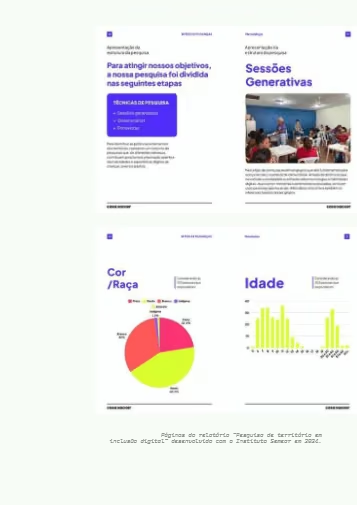
Territorial research on digital inclusion
Pages from the “Territorial research on digital inclusion” report, produced with Instituto Semear in 2024. The field research in Parque Via Norte and Vila Olímpia, in Campinas (SP), underpinned the teaching methodologies for digital inclusion by age group and the technical advice given to social assistance organisations.
Who answered the survey
colour or race
gender identity
Asian-Brazilian and non-binary people make up the remainder. Source: Bytes de Mudanças (2024).
see the data as a table
| Colour/race | % |
|---|---|
| Mixed-race | 43,2% |
| White | 32% |
| Black | 22,4% |
| Indigenous | 1,3% |
| Gender identity | % |
|---|---|
| Cis women | 52,8% |
| Cis men | 43,6% |
| Other | 2,6% |
| Trans women | 0,7% |
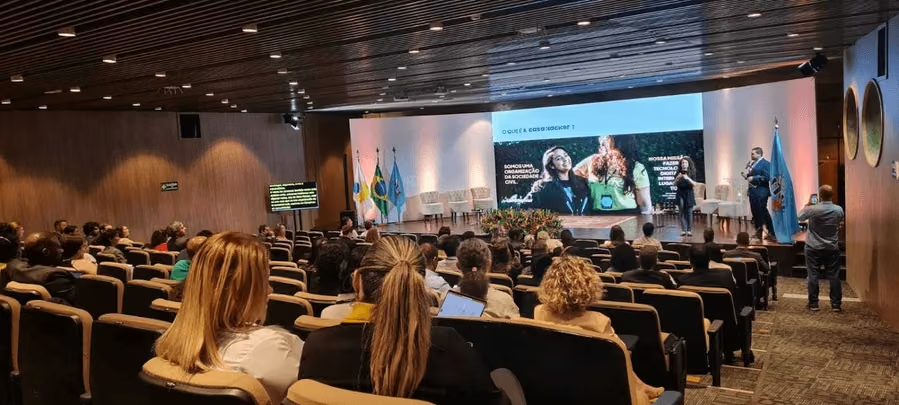
International presence
Programme record

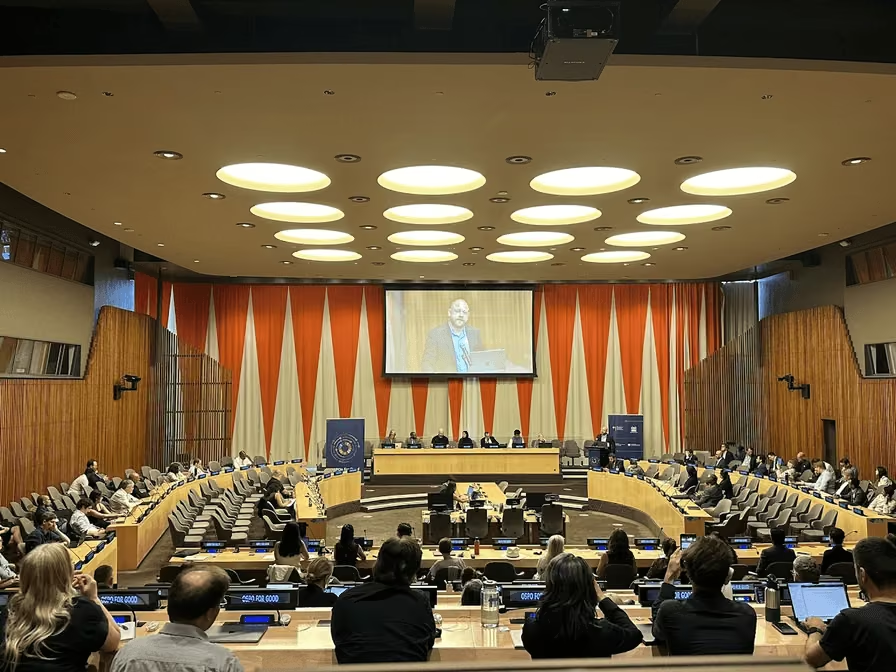
Internet Segura, Disinformation and Digital Wellbeing
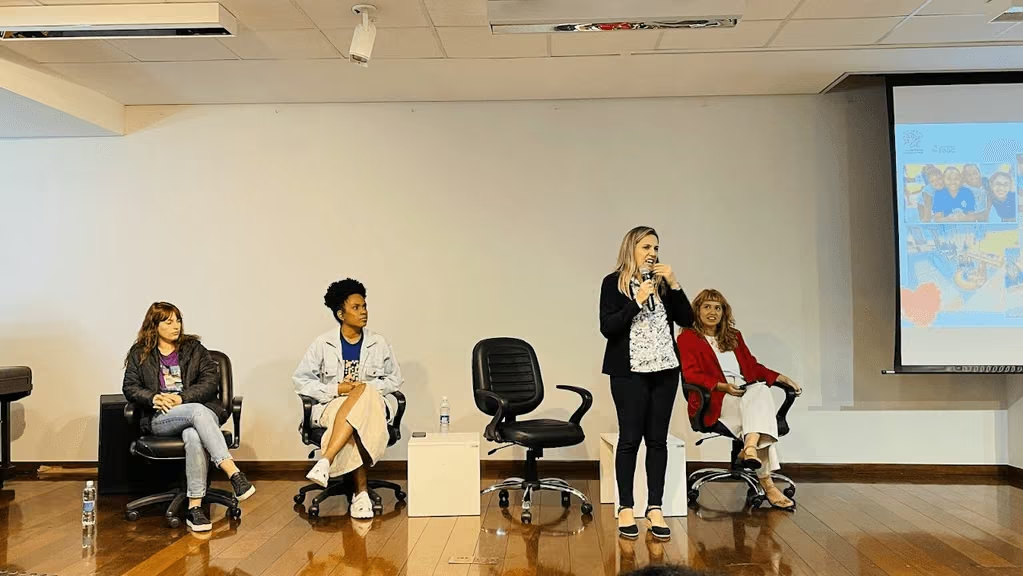
The Internet Segura, O Que o Futuro Quer and Data Detox initiatives were our main fronts in promoting good privacy practice, online safety, countering disinformation and digital wellbeing which, from 2022 to 2025, engage educators and people of all ages in activities for parents, students and the general public of the peripheries.
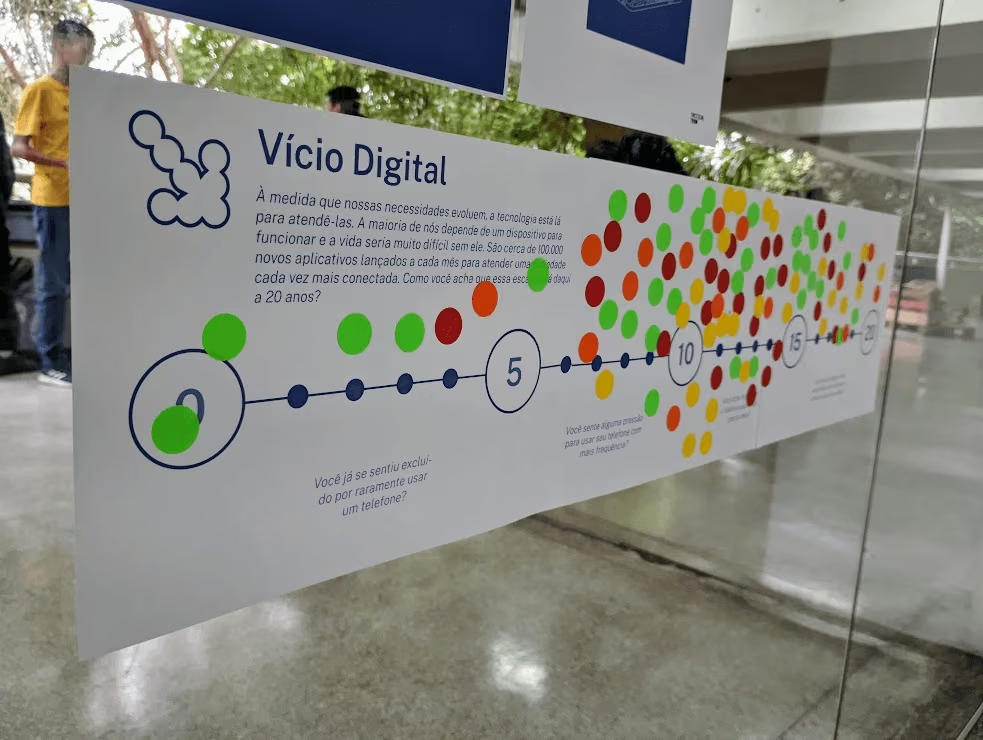
In partnership since 2018 with Tactical Tech of Berlin, Germany, Casa Hacker has implemented numerous initiatives in cooperation with the organisation, drawing on the educational methodologies created by Tactical Tech and its community.
We translated and adapted methodological resources such as “O Que o Futuro Quer” and “Data Detox” to run Internet Segura education activities and workshops in São Paulo (city), Campinas, Sumaré and Ubatuba, from 2022 to 2025.
We ran Internet Segura activities open to the general public, each lasting 1h30.
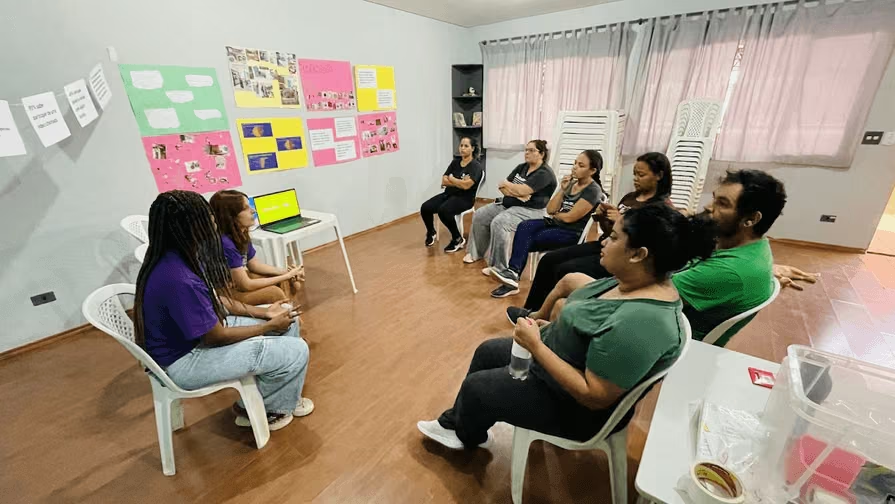
We trained educators, online and in person, to multiply our Internet Segura educator-training methodologies.
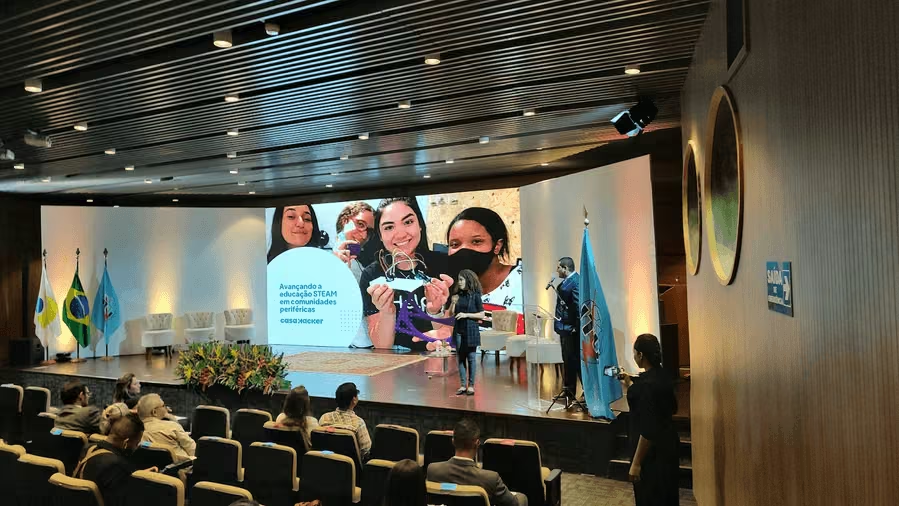
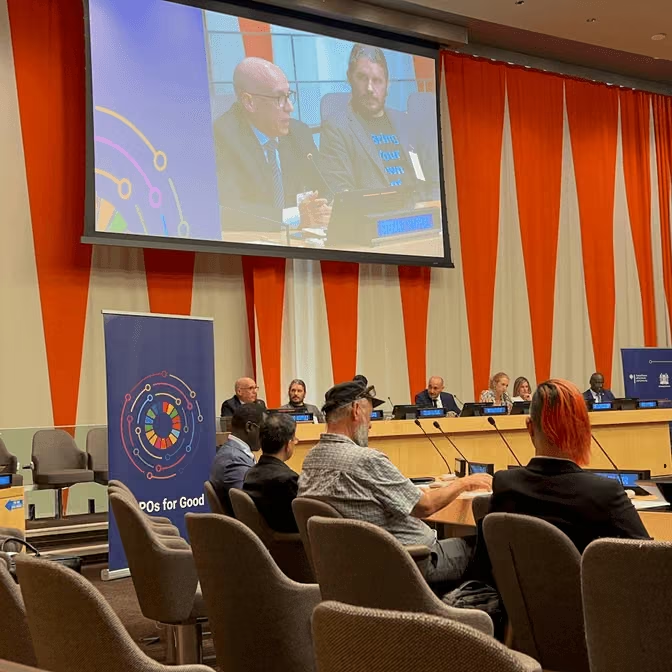
We shared good practice internationally on Internet Segura education models, with organisations from Europe and Africa taking part.
People reached
see the data as a table
| Year | People reached |
|---|---|
| 2022 | 340 |
| 2023 | 380 |
| 2024 | 395 |
| 2025 | 660 |
Where it happens
-
Sumaré · SP — Escola Estadual Luiz Campo Dall Orto Sobrinho
-
Sumaré · SP — Sociedade Beneficente São Judas Tadeu
-
Sumaré · SP — Escola Estadual Wadih Jorge Maluf
-
Campinas · SP — Núcleo Calvariano (Jardim São Pedro de Viracopos)
-
Campinas · SP — Centro Comunitário da Criança do Parque Itajaí I e Região (Parque Itajaí)
-
Campinas · SP — Casa Santana — Unidade Jardim Florence
-
Campinas · SP — Casa Santana — Unidade Campina Grande
-
Campinas · SP — Casa Santana — Unidade Esmeraldina
-
Campinas · SP — Casa Santana — Unidade Jardim Rossin
-
Campinas · SP — ADRA Núcleo Professora Cássia Rodrigues Lasca (Jardim Bom Sucesso)
-
Campinas · SP — Programa Juventude Conectada do Município de Campinas
-
São Paulo · SP — Centro Cultural Ruth Cardoso — Vila Nova Cachoeirinha
-
Ubatuba · SP — Gaiato — Ipiranguinha
Methodological partnership: Tactical Tech
Workshop record
Driving Social Innovation in the Territories
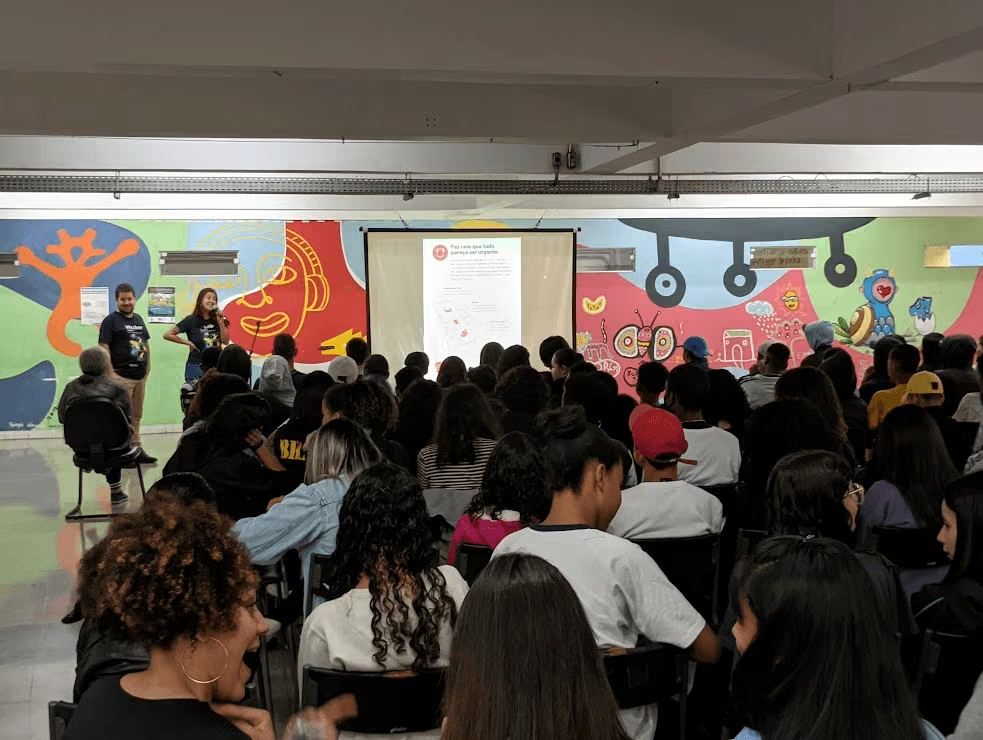
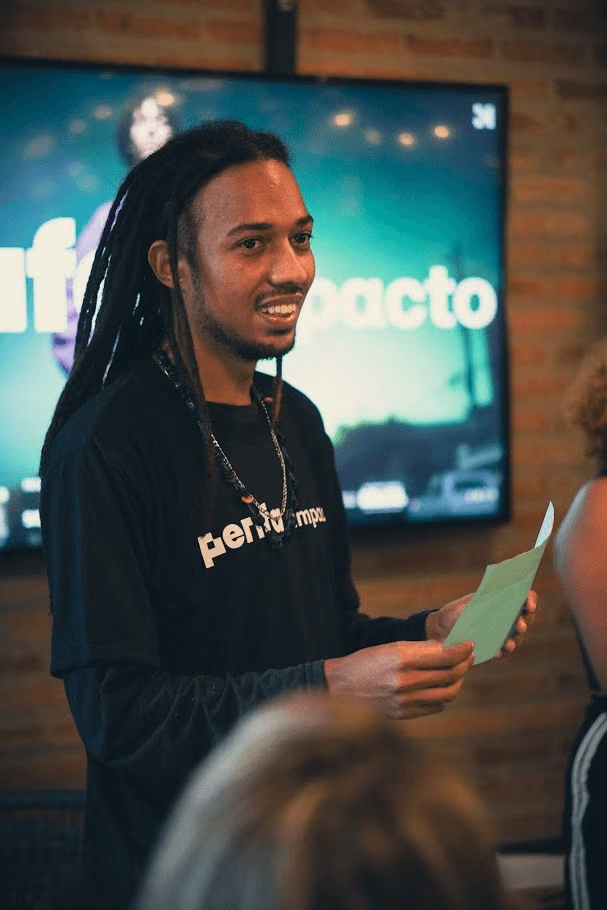
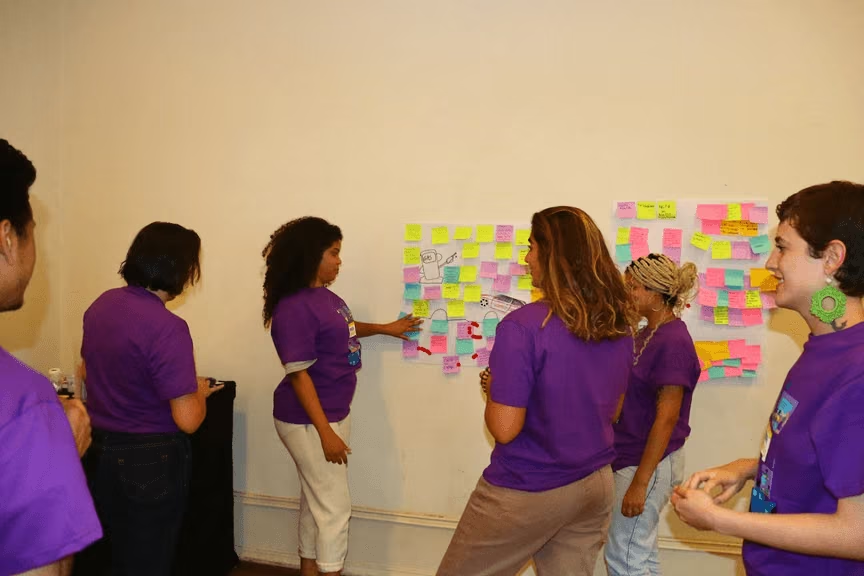
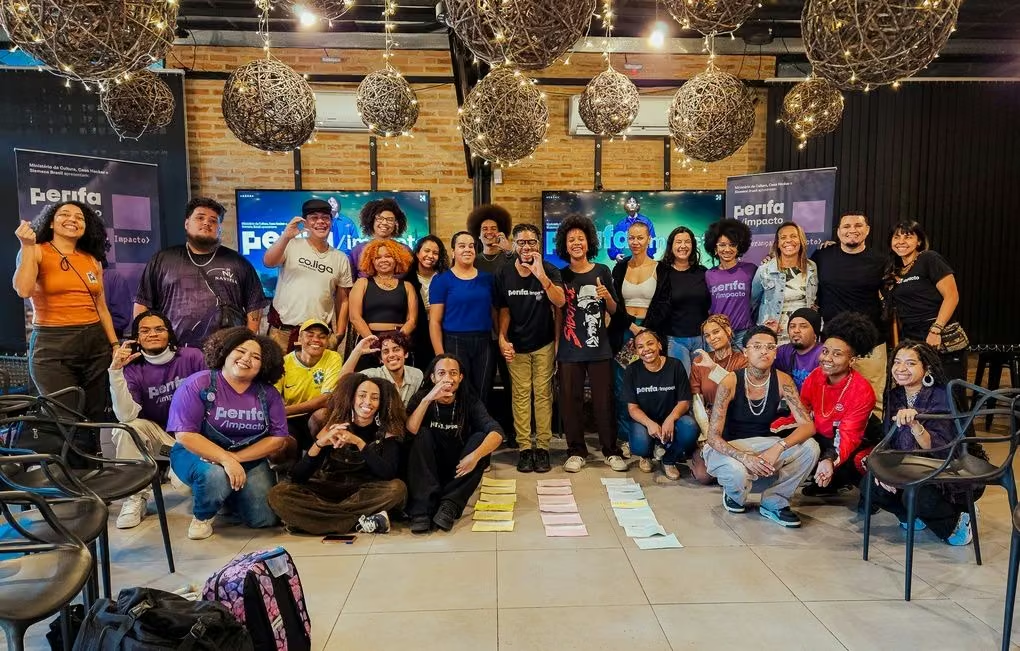
The PerifaImpacto, Quebrada em Movimento and Inova Quebrada programmes supporting impact entrepreneurs and impact businesses were our main fronts in entrepreneurship education and, above all, in supporting leaders on their journeys of territorial transformation, from 2022 to 2025, engaging people of all ages from the periphery.
The initiatives build entrepreneurial and cultural-production skills and competences, and provide advisory support, coworking spaces, short-term seed capital, psychological support, incentive stipends and access to networks.
We created coworking spaces, running since 2023 in Distrito Campo Grande, open and free for non-profit use.
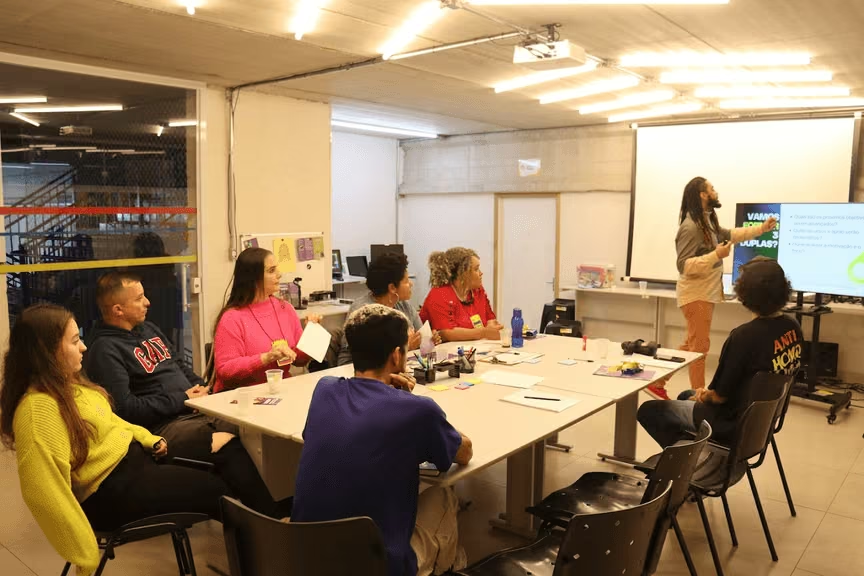
We offer entrepreneurship education learning tracks covering cultural production, management, finance, fundraising and investment, communication, territorial mapping, advocacy in public policy, among others.
We award incentive stipends so entrepreneurs can begin their studies in entrepreneurship and sociocultural impact.
Through open calls and support funds, we offer seed capital so leaders in Distrito Campo Grande can start impact initiatives and businesses.
We run events such as Quebrada Talks and take part in ecosystem events with our community of entrepreneurs, to widen opportunities and networks.
We support entrepreneurs with collective psychotherapy, contributing to their health during the development phase of their initiatives and businesses.
People reached
see the data as a table
| Year | People reached |
|---|---|
| 2022 | 10 |
| 2023 | 37 |
| 2024 | 46 |
| 2025 | 78 |
“No Corre com a Wal”
“No Corre com a Wal”, our 2023 web series, told the stories of entrepreneurs who took part in our social innovation programmes. To watch the series and see how we changed the lives of entrepreneurs from the periphery, visit our channel.
Where it happens
-
Campinas · SP — The whole city of Campinas (SP)
-
São Paulo · SP — The whole city of São Paulo (SP)
Sponsors: FEAC Foundation
Support: Siemens · ICE — Instituto de Cidadania Empresarial · Coalizão pelo Impacto
Tax incentive: Lei Rouanet · Government of Brazil — Ministry of Culture
- Only PerifaImpacto received support under the National Culture Support Programme.
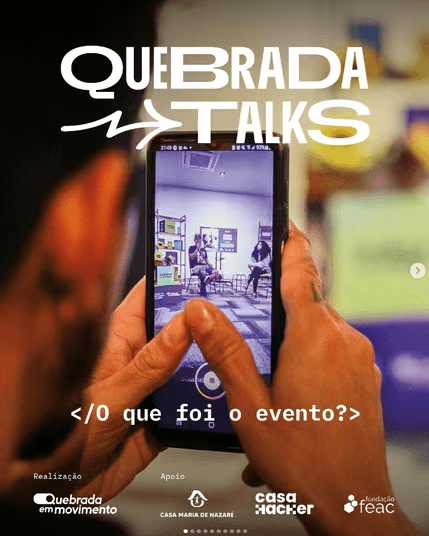
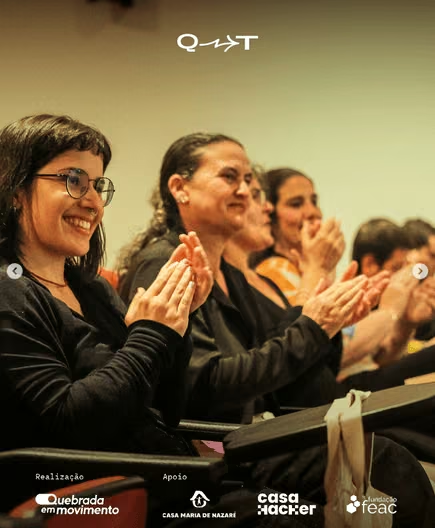
#QuebradaTalks · 2025
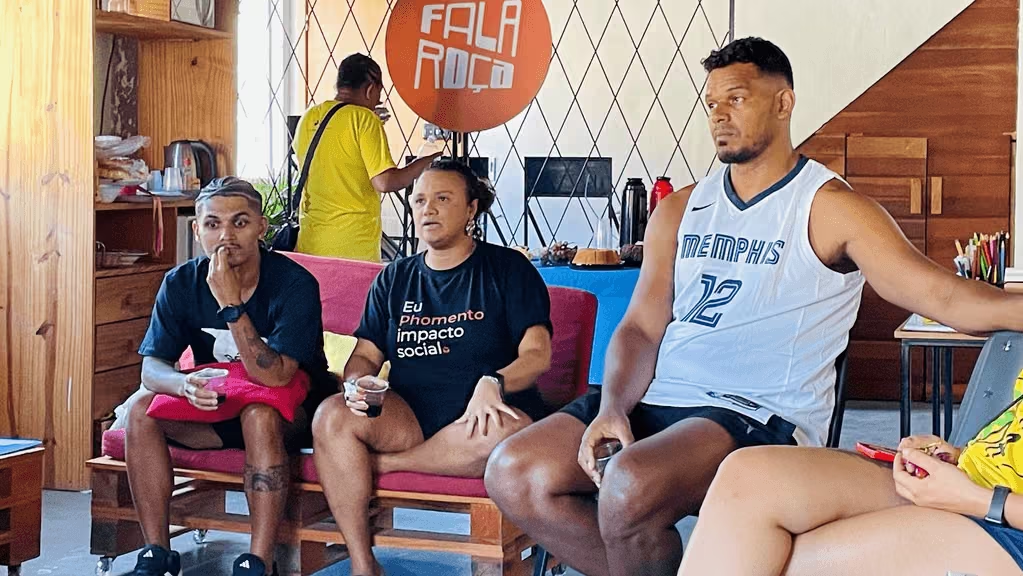
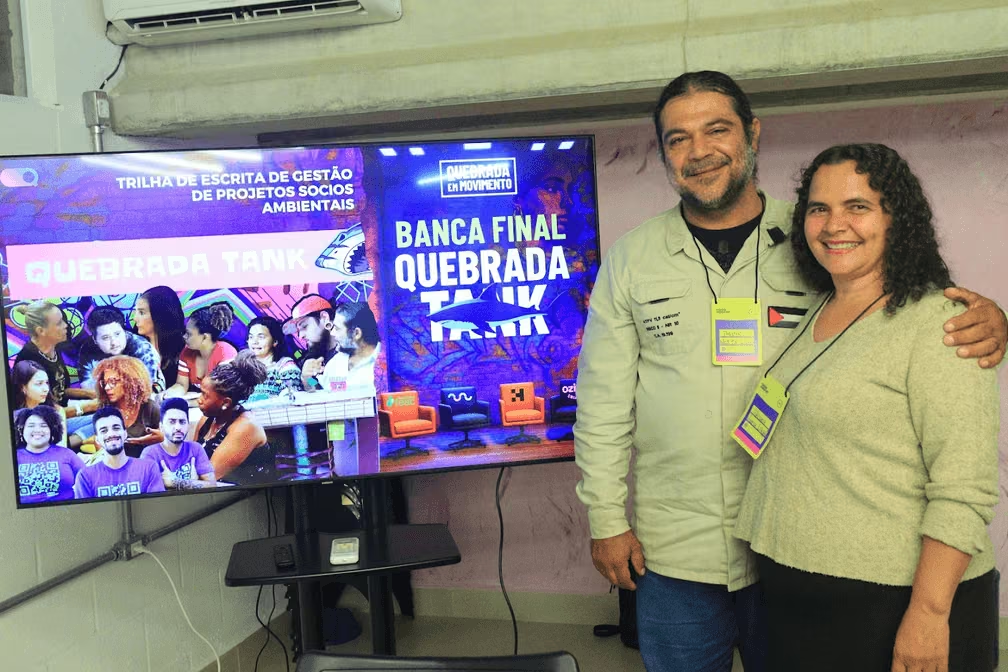
#QuebradaTalks, in 2025, was a gathering of forces that put on stage the stories and trajectories transforming our quebradas every single day. Leaders, collectives and organisations came together to trade ideas, share what they had learned and show that social and environmental impact is also born of the territory, of the grassroots and of the periphery.
That gathering marked the close of another cycle of #QuebradaemMovimento, a project that strengthens the quebrada with mentoring, learning tracks and the Fundo da Quebrada open call, backing those who dream big and turn the daily grind into reality.
Programme record
Social Participation and Young People
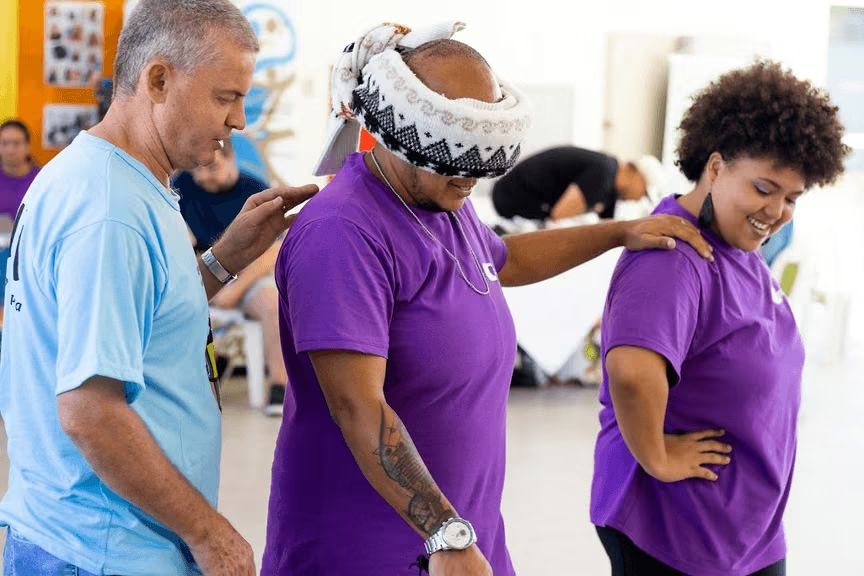
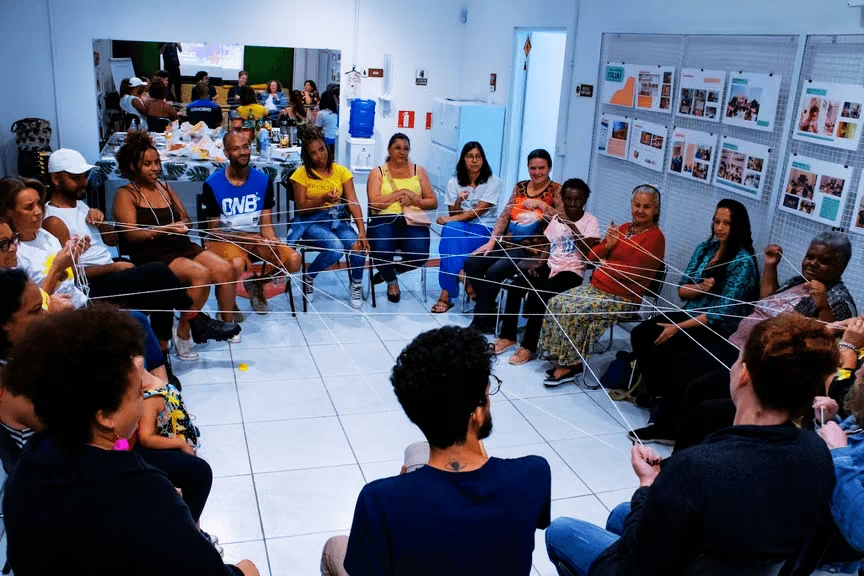
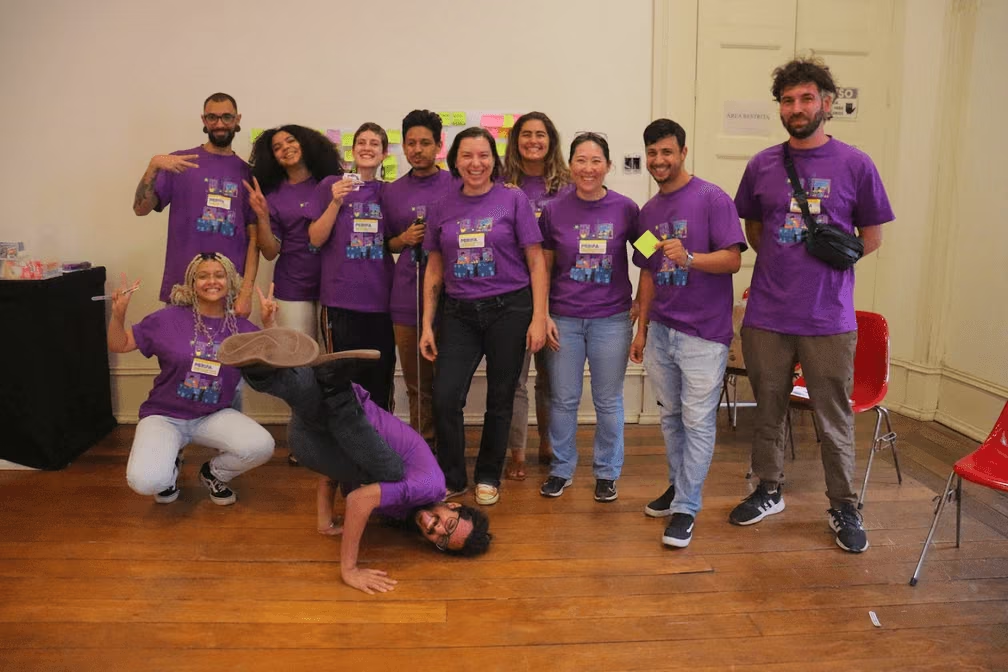
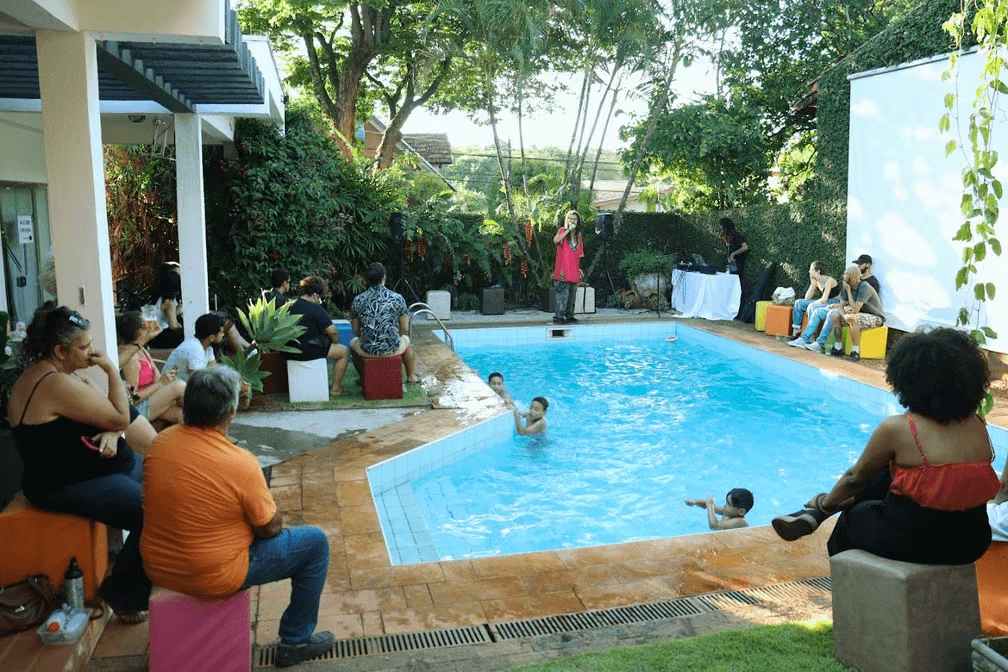
Casa Hacker’s path in strengthening the social participation of young people in Campinas took shape through two complementary, evolving initiatives that engaged young people in playing a role of social participation on their own demands and those of their territories.
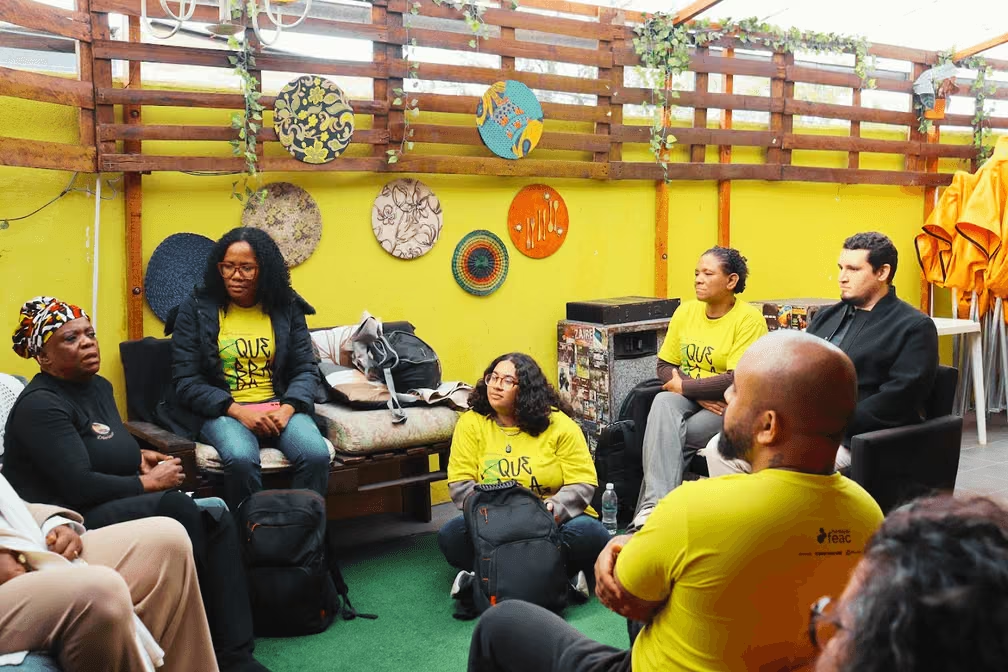
The Youth Council was an active-listening initiative of FEAC that led on to the Youth Forum, consolidating itself as a broader, autonomous movement rooted in the realities of the peripheral youth of Campinas.
22 meetings held by the Youth Council up to 2023 · 10 young fellows on the Leadership Committee of the 2024 Forum · 5 territorial forums in the peripheral regions of Campinas
In February 2021, the FEAC Foundation created the Youth Council of its Programa Juventudes with the aim of offering a space for dialogue, training and decision-making for the young beneficiaries of the social projects run by FEAC and its partner organisations. Casa Hacker took on the role of facilitator and mediator of the meetings, building a tailored methodology based on mobilising youth collectives and on the experience of the peripheral youth of Campinas itself.
Over its period of activity up to 2023, the Youth Council held 22 meetings that included training and leadership-strengthening activities in advocacy, active-listening meetings and plenaries with peripheral youth, moments of discussion and alignment of the agenda with FEAC, and the production of reports to influence institutional decisions.
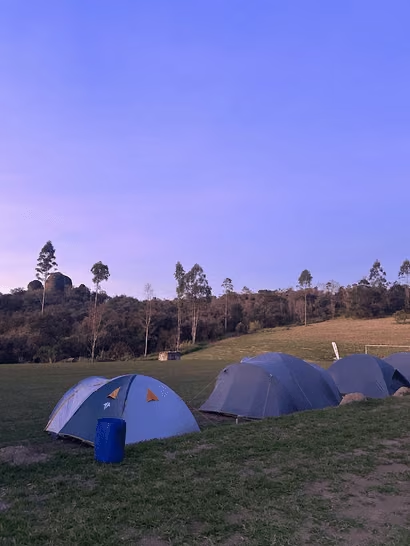
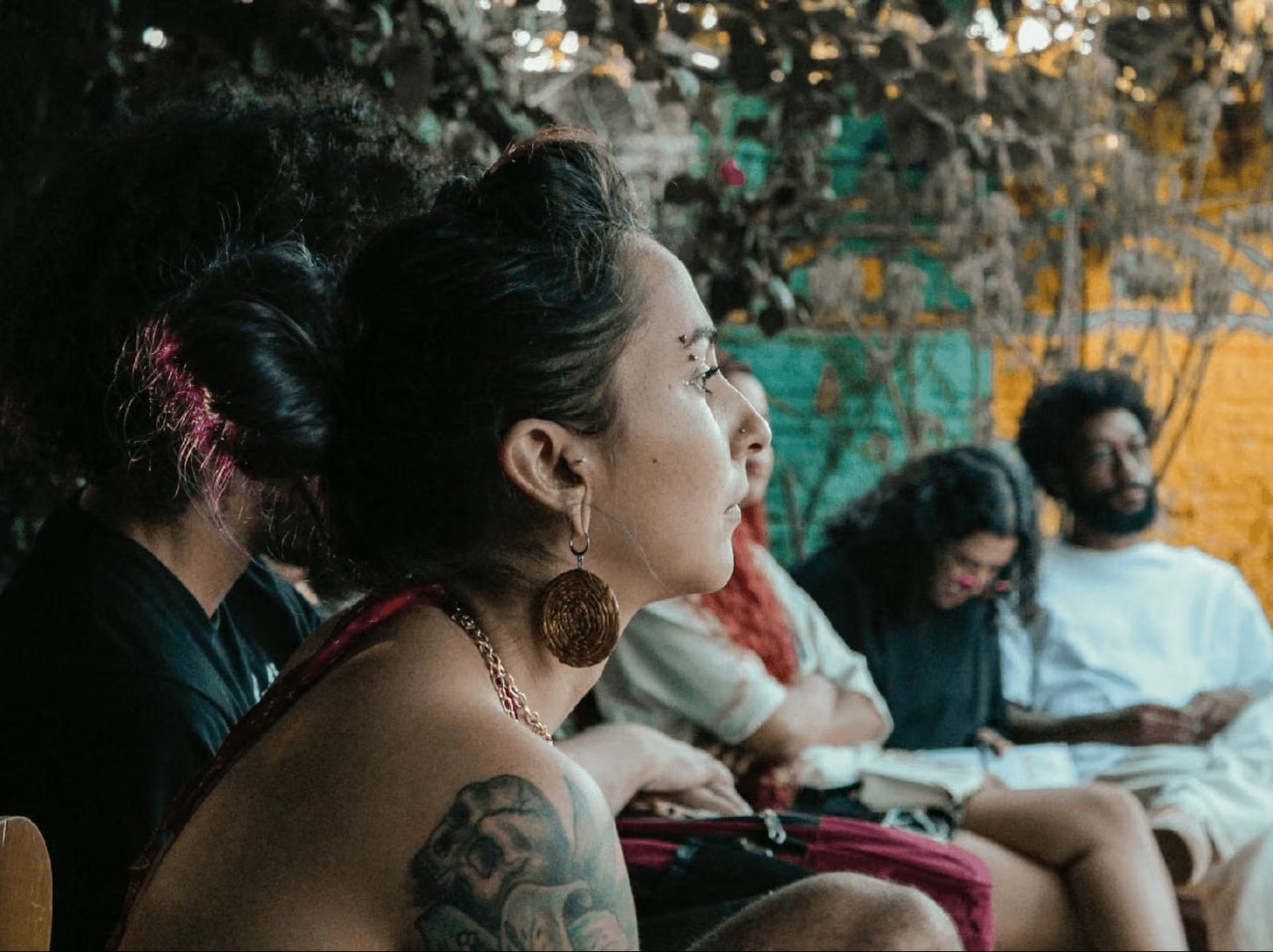
Among the most memorable moments is the immersive gathering held in Ubatuba, which served as a milestone for reflecting on how the Council was evolving and on its transition into a more independent movement. During that period of maturing, the young people involved began to discuss the need to widen their work beyond the institutional space of FEAC, holding broader and more territorialised gatherings.
The 2024 Youth Forum emerges as a natural outgrowth of the Youth Council, consolidating itself as a broader, autonomous movement rooted in the realities of the peripheral youth of Campinas. Created and led by the young people of the city, the Forum is born of the agency of those who took an active part in the Council, keeping continuity with the experience built up and extending the reach of the work. The initiative is made possible by sponsorship from the FEAC Foundation and developed a participatory methodology built on essential pillars such as thematic training on social participation, human rights and public policy, plus five territorial forums held in the peripheral regions of Campinas.
The Forum had 10 young fellows who formed the Leadership Committee, many of them alumni of the Youth Council, acting as mediators at the territorial meetings and taking on strategic roles in the project’s decision-making. The initiative also developed a digital platform that works as a living space for disseminating results, including thematic reports, interactive mapping of youth initiatives in Campinas and the production of the podcast “Juventude na Voz!” with debates on themes central to young people.
This evolution from the Youth Council to the Youth Forum shows the organisational maturity the young people of Campinas are capable of, and consolidates a replicable social technology that puts young people as the protagonists of the transformations in their territories.
Themes of the territorial forums
-
Young people and challenges in the territory
-
Public policy and peripheral agency
-
Black youth and mental health
-
Young women in sport
-
Connections that transform
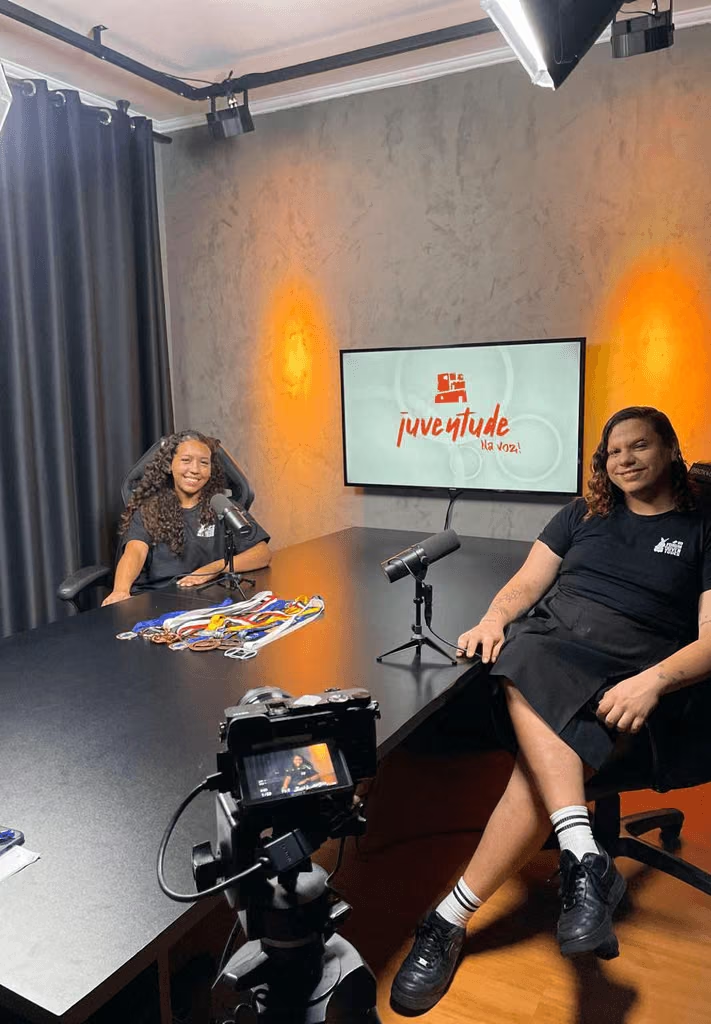
Juventude na Voz
The podcast “Juventude na Voz!” is part of the digital platform of the Youth Forum, with debates on themes central to peripheral youth. Recorded in Campinas (SP), in 2023.
Where it happens
- Campinas · SP — Cidade Satélite Íris, Jardim Campo Belo, Chácaras Campos Elíseos and Centro
Support: FEAC Foundation
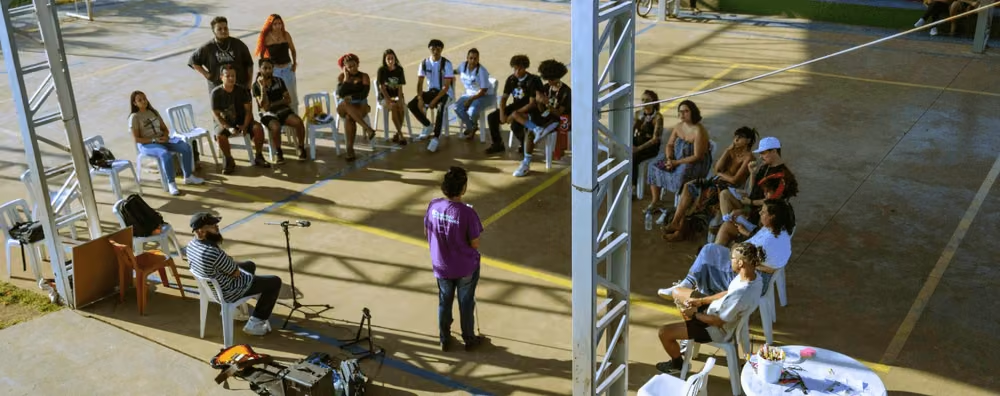
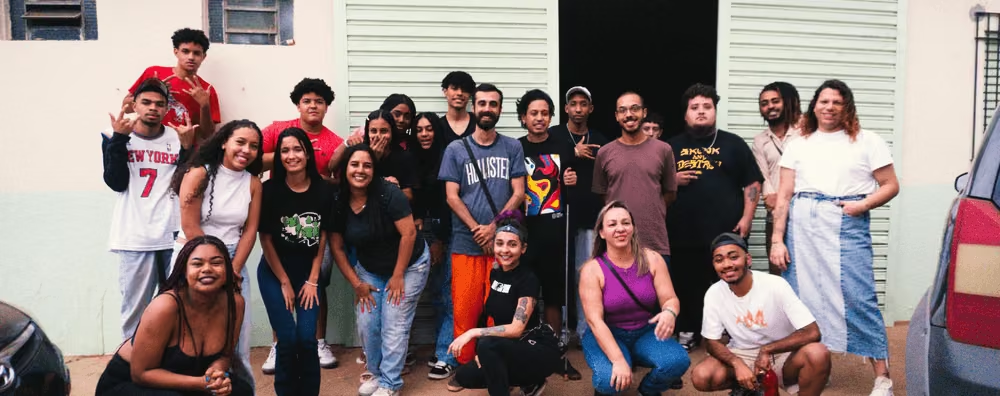
Record of the gatherings
About this report
Casa Hacker — a Brazilian network of hacker culture, technology and socio-environmental impact. Our network has the potential to develop its territories with science, technology and social innovation.
Geraldo Barros · Executive Director, Casa Hacker
Our Impact 2022–2025 report · Version 0.1 · October 2025 · casahacker.org