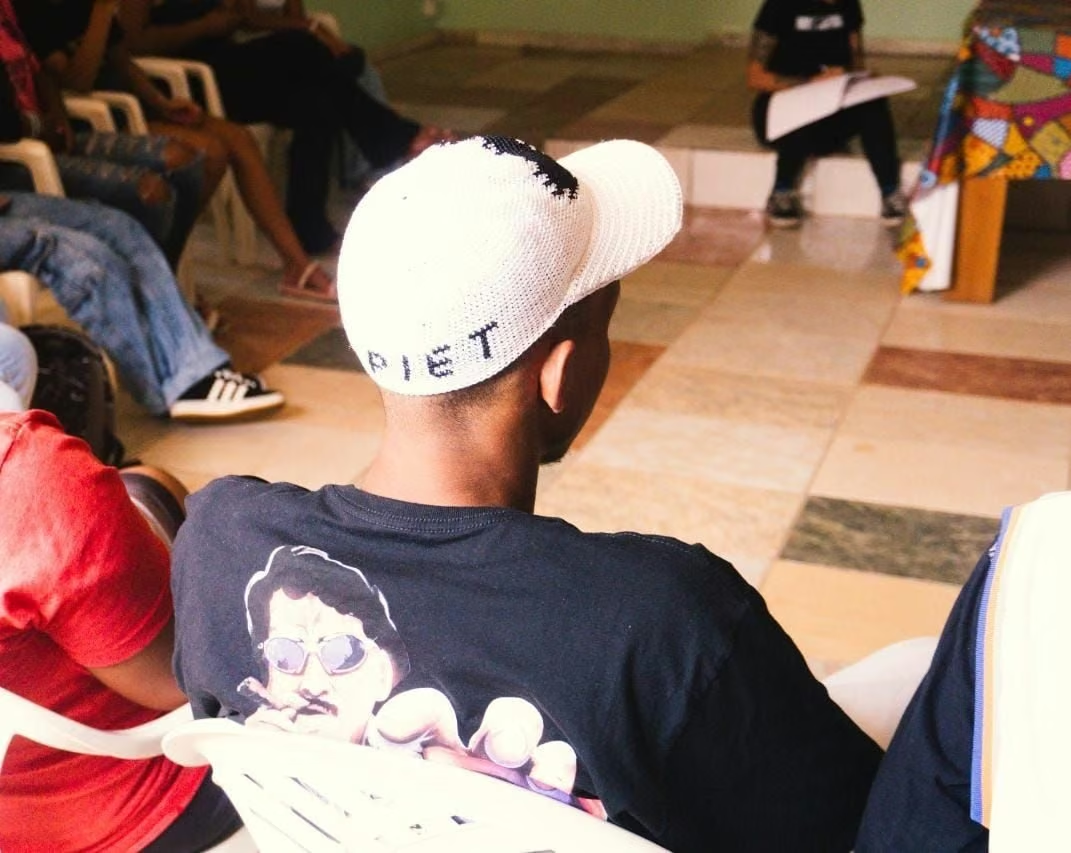
Young participants at the first edition of the Territorial Forum, held in Jardim Campo Belo, Campinas, on 24 August 2024
On 28 September 2024, the Territorial Forum of the Youth Forum project was held in the Cidade Satélite Íris neighbourhood, in Campinas. With 20 participants and 30 registrations, the event is part of an initiative devoted to democratising access to knowledge and encouraging the active participation of young people in building their territories and shaping local public policy. The aim is to strengthen youth leadership, fostering autonomy and transformative engagement.
Cidade Satélite Íris: Context and Challenges
Choosing Satélite Íris to host this edition of the forum was strategic. Known as one of the oldest housing developments in Campinas, the neighbourhood emerged to meet growing housing demand during a period of rapid urbanisation. Although it is home to around 4,200 families, it faces significant structural challenges, such as limited access to public services and precarious infrastructure.
According to the study by Jéssica A. S. Rodrigues and Márcio Cataia, O circuito inferior da economia urbana na produção de emprego e renda: Residencial Sírius (Cidade Satélite Íris) Campinas, SP, the local economy is characterised by a lower circuit, in which small businesses and informal services play an essential role in generating employment and income. The research reinforces the urgency of public policies that consolidate the economic and social development of the region, in line with the forum’s aim of highlighting the demands of young people and promoting their involvement in creating collective solutions.
Exercises and Reflections: What Are Young People Asking For?
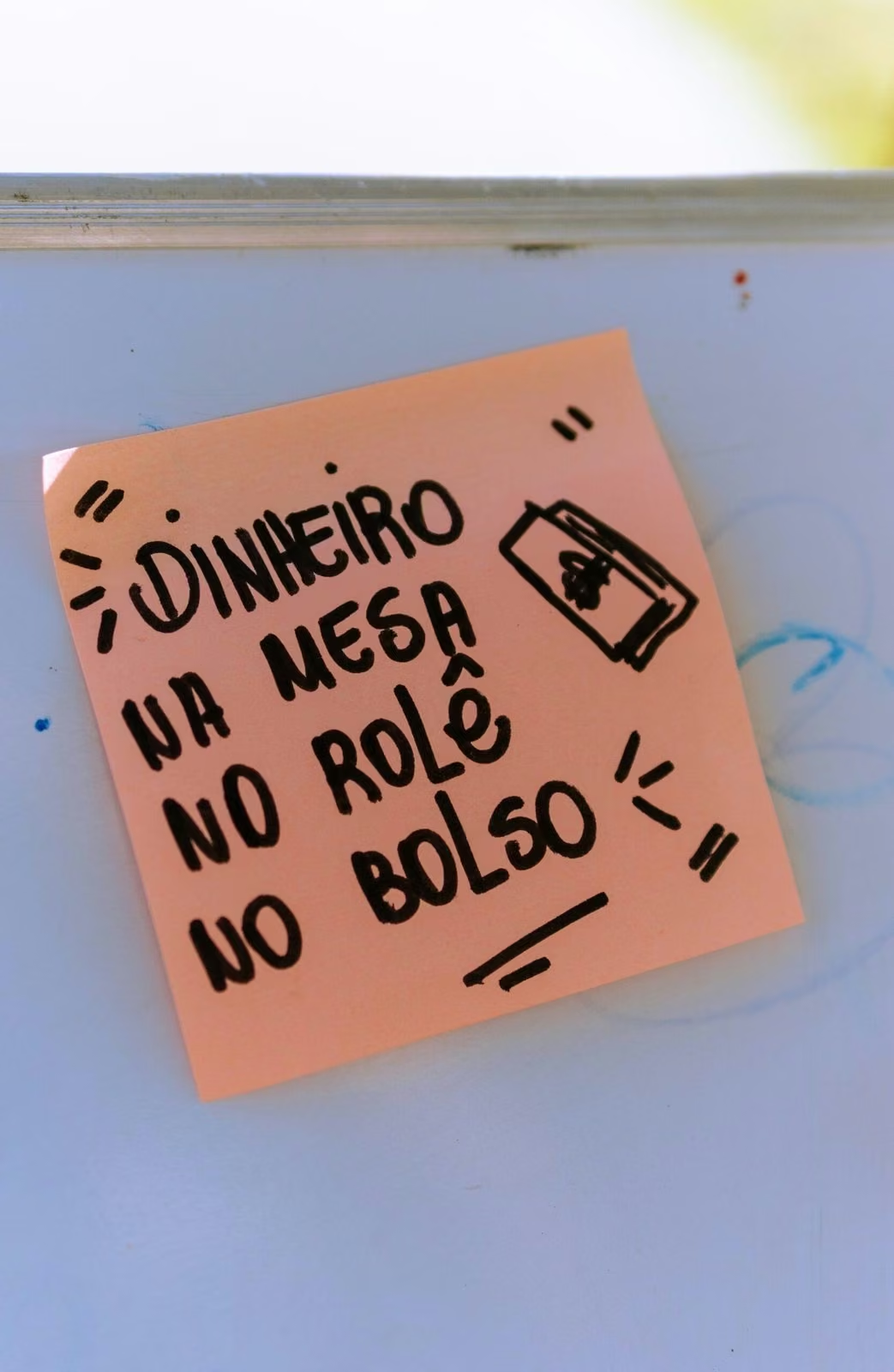
The programme opened with an exercise facilitated by Waléria Simony, a young leader of the Youth Forum 2024 governance committee. During the activity, each participant burst a balloon containing a question about culture and leisure. Then, during a musical performance by the artist Jovem Urso, the young people wrote down on sticky notes the challenges they face in their daily lives.
Among the main issues raised was the need to hold rap battles in the neighbourhood, recognised as a form of cultural expression and resistance that strengthens youth identity. The demand for “money on the table, on the night out and in your pocket” also reflects the urgency of guaranteeing access to financial resources and economic opportunities for local young people.
The search for investment that enables social progression points to the need for public policies that foster the continuous and sustained development of young people. The lack of access to public tools and the shortage of quality teaching make clear the need for an education system that prioritises equity and inclusion, ensuring that all young people have the conditions they need to develop fully.
Participants stressed the importance of creating suitable spaces for debate and dialogue, essential to building active and participatory citizenship. The proposal for legislation safeguarding culture points to the relevance of cultural policies that value diversity and widen access to culture for everyone.
Challenges and Proposals from Young People
Young people also underlined the importance of permanent investment, independent of public calls for proposals, reinforcing the need for stable and continuous funding for youth-focused initiatives. The demand for real job opportunities makes clear the need for labour policies that take peripheral realities into account.
In addition, the wish to use the neighbourhood square for community events points to a call for public spaces that are genuine places of shared life and community strengthening. Creating centres that encourage sport, and access to cultural and sporting programmes with grants, underline the importance of initiatives that promote the full development of young people.
Valuing cultural groups and collectives, as well as holding more poetry gatherings and arts-focused activities, makes clear the need to invest in cultural policies that recognise artistic expression as a tool of social transformation. Sex education campaigns aimed at young people were also mentioned, reinforcing the importance of a rounded education that addresses questions of health and rights.
Questions relating to housing and transport call for urban policies that guarantee the right to the city and access to essential services. In addition, the search for more affordable vocational courses in the peripheries and the demand for environmental awareness reinforce the need for integrated approaches in public policy.
The proposal for harm-reduction campaigns and incentives for occupying public spaces points to the search for an urban environment that is safer, more inclusive and oriented towards building a fairer, more equal collective future.
Participatory Budgeting: The Voice of Young People
The forum also ran a participatory budgeting exercise, in which participants were divided into three groups to discuss how to allocate R$ 9 billion of the municipal budget across areas of priority for young people. Their choices showed critical awareness and strategic ability in drawing up proposals.
Among the priorities identified were:
- Housing for young mothers
- Skate parks and spaces for debate and knowledge
- Environmental education
- Health services for women and young people
This activity made active citizenship a concrete experience and reinforced the importance of youth participation in managing public resources.
Conclusion: Young People as Agents of Transformation
The second Territorial Forum showed that peripheral young people in Satélite Íris and other regions of Campinas hold a critical view of social questions. It is essential that society listens to and values these voices, fostering an intergenerational dialogue that strengthens collaboration towards a more inclusive and fairer future for everyone.
The collective reflection and the proposals presented reveal a desire for permanent spaces of youth leadership and reaffirm the potential of young people as agents of social transformation. Holding the forum in this territory, marked by creativity and resistance, once again made clear that young people are not only reflecting on the challenges of their territories, but also proposing concrete solutions to transform reality through social and political participation.
Written by:
Débora Cristina da Paz Manager of the Youth Forum 2024
With rapporteur contributions from:
Jefferson Rodrigues Young leader of the Youth Forum 2024 governance committee
References
- RODRIGUES, Jéssica A. S.; CATAIA, Márcio. O circuito inferior da economia urbana na produção de emprego e renda: Residencial Sírius (Cidade Satélite Íris) Campinas, SP.