
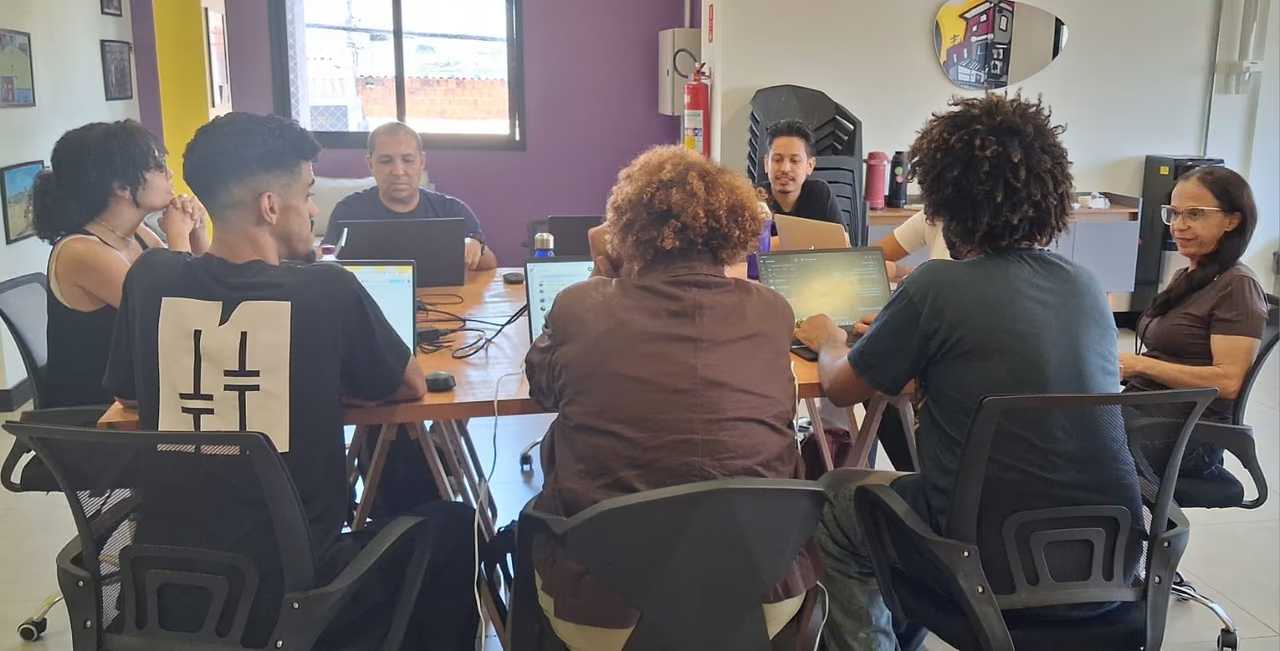
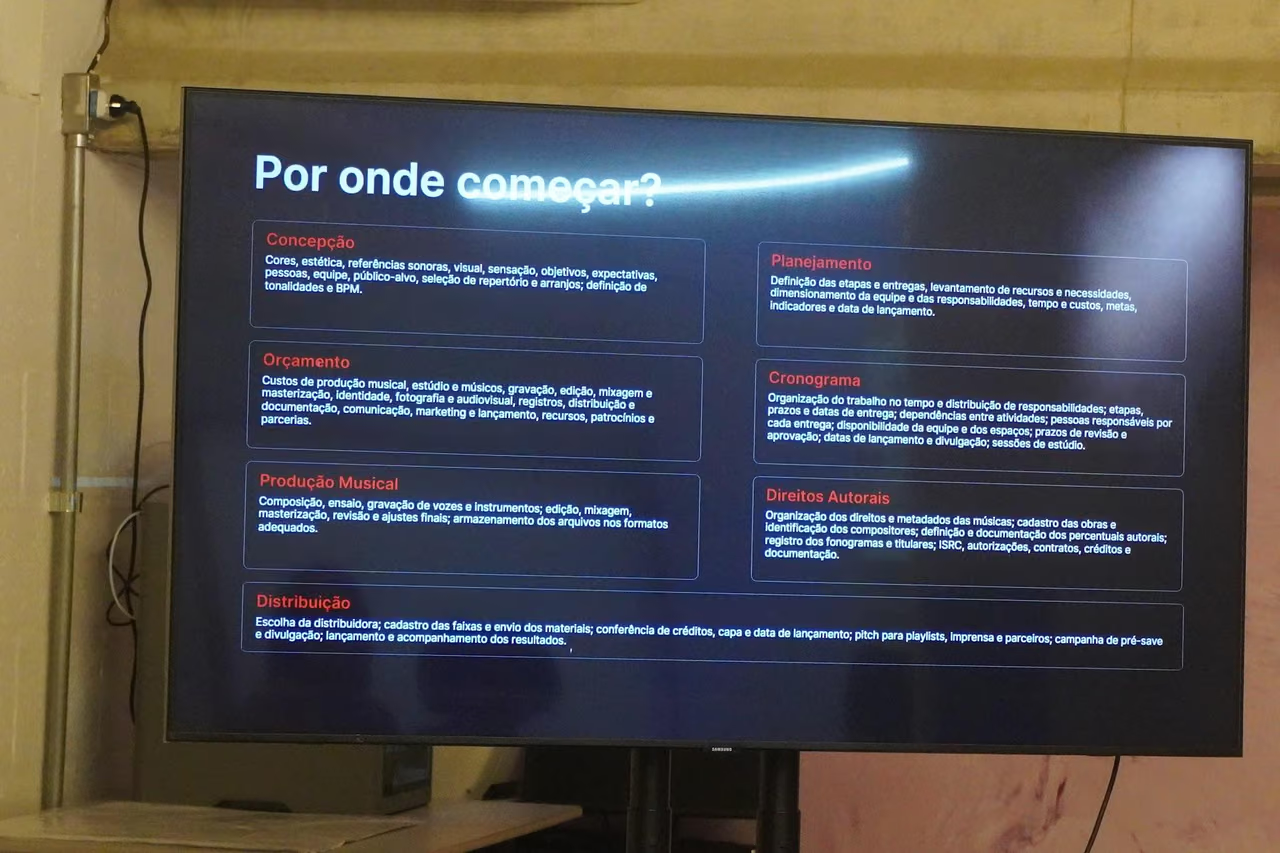
 Circle Discussion: Music & Creative Economy, after conception BUDGET
A consistent budget connects an initiative’s objectives with the conditions necessary for its implementation, contributing to the viability and quality of the actions developed within the territories.
Social impact projects are born from identified needs, collective experiences, and initiatives that seek to transform reality. For these proposals to materialise, however, it is necessary to establish a consistent relationship between what is intended to be carried out and the available resources.
In project management, this relationship is fundamental, since the budget is not merely a bureaucratic stage of proposal drafting or a requirement to access resources. It is an integral part of planning, guides decisions, and helps determine whether the planned activities can be carried out under the established conditions.
When monitoring projects, there is a key point of attention: the coherence between the proposed activities and the presented budget. An initiative may have relevant objectives, feature a well-founded schedule, and mobilise different audiences, but it encounters difficulties when the funds allocated for execution do not match the necessary costs.
This gap between planning and budgeting can compromise a project’s viability even before it begins.
When the budget fails to keep pace with the proposal
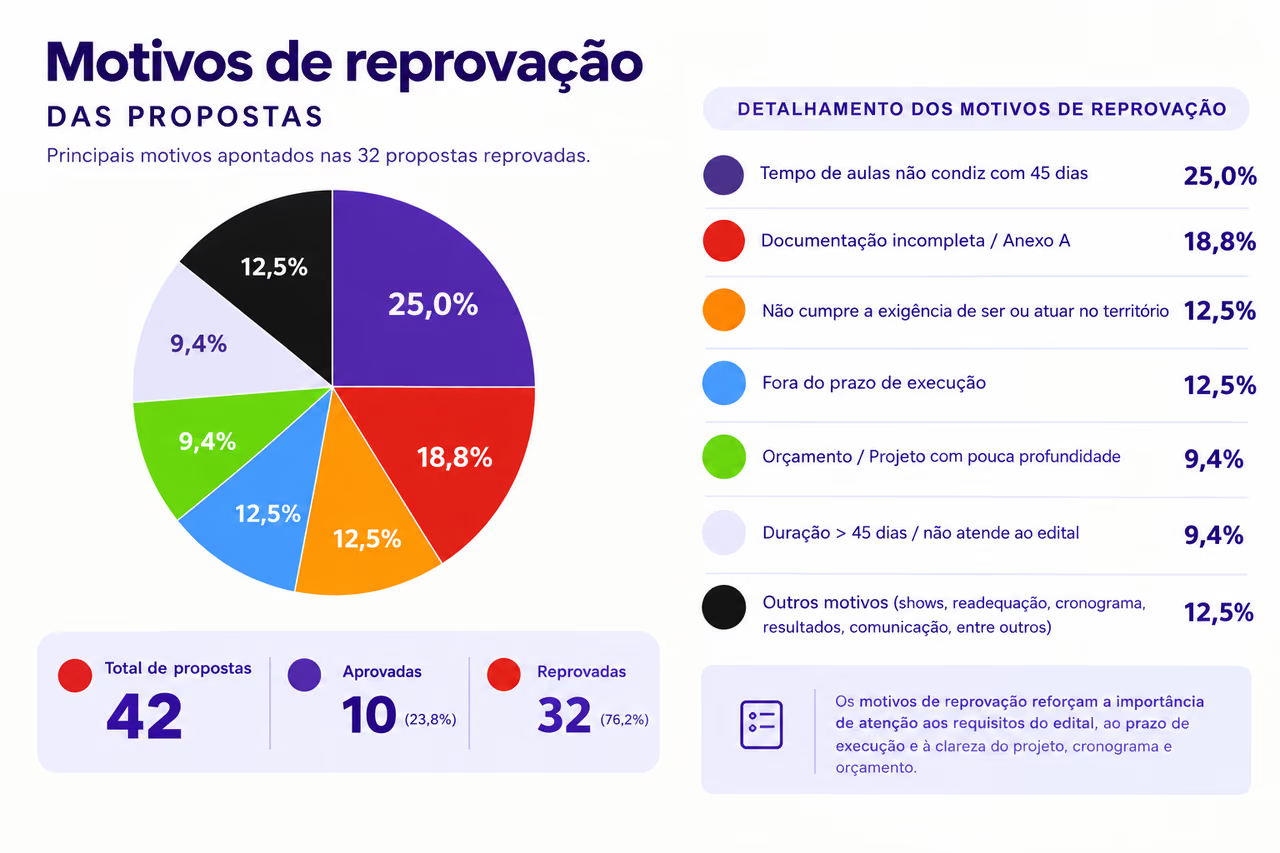
The experience of the first edition of the Fundo de Cidadania Ativa 2026, by Hub Quebrada em Movimento, helps to illustrate this challenge. Out of the 42 proposals submitted, 10 were selected to receive financial support. Among the reasons for rejection recorded in the report, 9.4% were classified as “budget/project lacking depth”.
This data highlights an important aspect of the proposal drafting process: the budget needs to be connected to the set of planned activities. It is not enough to present an amount compatible with the call’s limit; it is necessary to demonstrate that the estimated resources correspond to the initiative’s needs.
This relationship requires planning to consider what will be carried out, how many people will be involved, which services and materials will be required, and what costs are associated with each activity. When this information is not sufficiently detailed, evaluating the proposal’s viability becomes much more difficult.
The reflection is not limited to the selection stage. A consistent budget also helps organise execution, guide decisions, and reduce the risk that necessary expenses are only identified once activities are already underway.
The territory is also part of the calculation
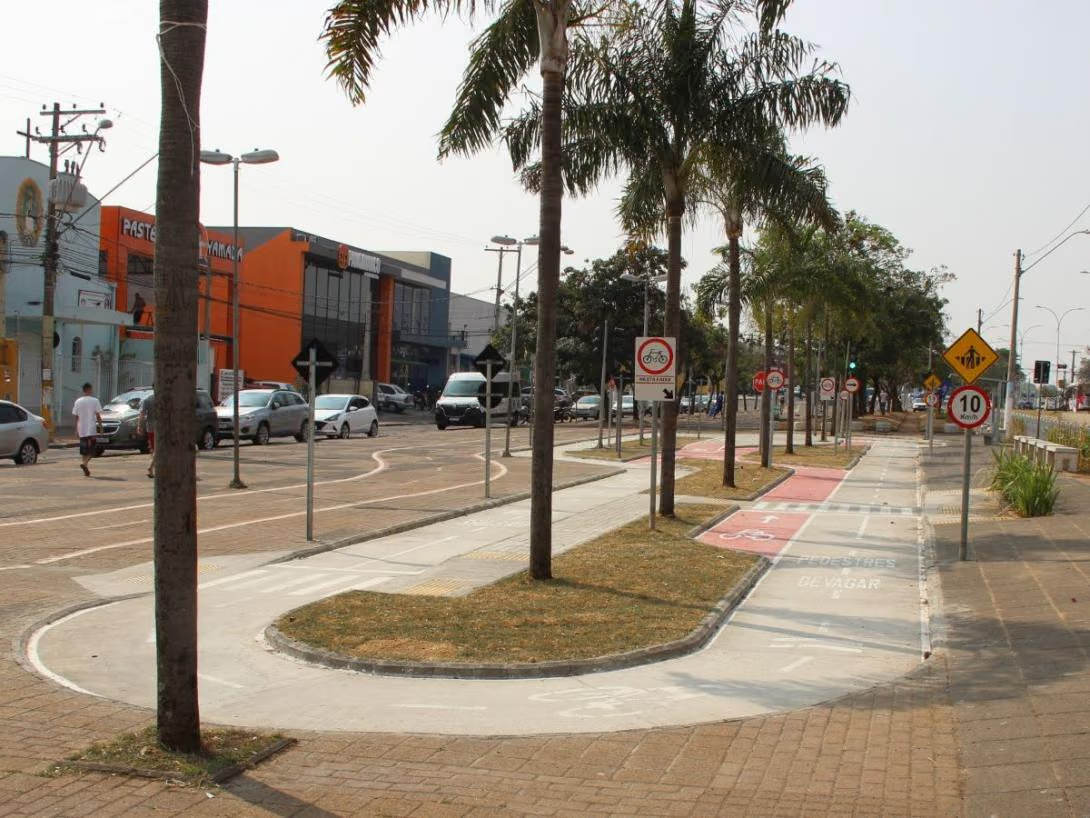
*Praça da Concórdia - Campo Grande - Campinas *
A project’s budget must take into account the conditions under which activities will be carried out. In Campinas, for example, travel between neighbourhoods, transport of materials, availability of spaces, and access to suppliers can directly influence an initiative’s costs.
An activity carried out in a single location has different needs from one involving multiple spaces and successive meetings. Similarly, the number of participants and the duration of the activities affect the consumption of materials, catering, and necessary services.
These variables show why the budget needs to engage in a dialogue with planning and an understanding of local reality. The clearer the activities, quantities, and conditions of implementation, the greater the consistency of the financial estimates.
In this sense, knowledge of the territory also contributes to resource management. It makes it possible to recognise needs, identify alternatives, and make decisions that are more aligned with the concrete conditions of execution.
Planning today to execute in the coming months
Another important aspect is the time gap between drafting a proposal and starting activities.
In the second round of the call for proposals, for example, applications are scheduled for December and January, with execution beginning from February. This means that the figures used in drafting the budget may need to be revised in light of the conditions existing when expenses are actually incurred, whilst respecting the rules of the call.
Prices consulted during planning are important points of reference, but they do not guarantee that the same products and services will be available at the same prices a few months later.
Public data can help us understand this dynamic. In Campinas, the average price of regular petrol recorded in a survey by ANP went from R$ 6.42 per litre in the week of 19 to 25 July 2026 to R$ 6.45 in the week of 11 to 17 October 2026. Meanwhile, the basic food basket tracked by Observatório PUC-Campinas went from R$ 809.75 in July to R$ 882.86 in September 2026.
These indicators do not directly represent the transport or catering costs of each project, nor do they allow us to predict future prices. However, they illustrate the importance of working with verifiable references and understanding that different expenses may behave differently.
Considering this time gap does not mean predicting future costs with absolute precision, but rather drawing up well-founded estimates, monitoring the most relevant expenses, and understanding the management possibilities provided for in the funding instrument.
The budget as a decision-making tool
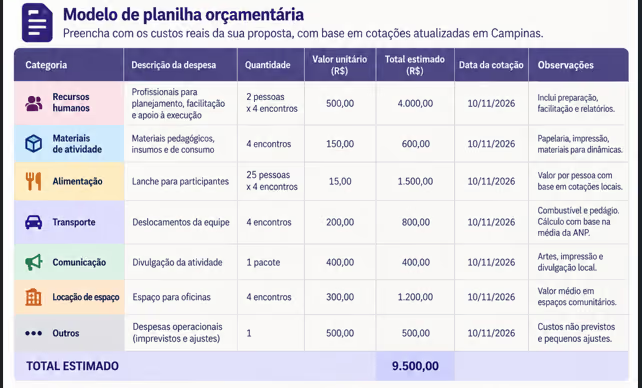
In calls for proposals with delimited amounts, such as those of R$ 5,000 or R$ 10,000, the budget also expresses choices regarding the scale and reach of the initiative.
It is necessary to establish a feasible relationship between the available funds, the planned activities, and the expected results. This requires recognising which expenses are indispensable, which conditions are already secured through partnerships, and which deliverables need to be scaled according to the project’s financial capacity.
A detailed spreadsheet contributes to this analysis when it presents not only total amounts, but also quantities, unit costs, and the relationship between each expense and the corresponding activities.
The aim is not to bureaucratise the work of collectives and civil society organisations, but to strengthen the conditions for their proposals to be executable. A consistent budget helps to identify gaps, substantiate decisions, and reduce the risk of taking on commitments that available resources cannot sustain.
Any forecast of financial margins or changes to expenses must also respect the specific rules of the call for proposals, including any requirements for authorisation.
Strengthening management means strengthening initiatives
Financial management is part of the ability to turn ideas into concrete actions. When objectives, activities, deadlines, and resources are aligned, the initiative gains greater clarity regarding what it can achieve and the conditions necessary to reach its results.
When working with social impact projects, this alignment is especially important because resources need to be connected to deliverables and the needs of the territories. The quality of planning helps ensure that financial decisions are made responsibly and that the proposals presented have realistic conditions for execution.
Thinking about the budget, therefore, is also thinking about the scale of commitment that a project makes to its audience and to the territory in which it operates.
A consistent budget is not one that simply balances out within the available amount. It is one that demonstrates, clearly and responsibly, how the planned resources will make it possible to turn the proposal into reality.
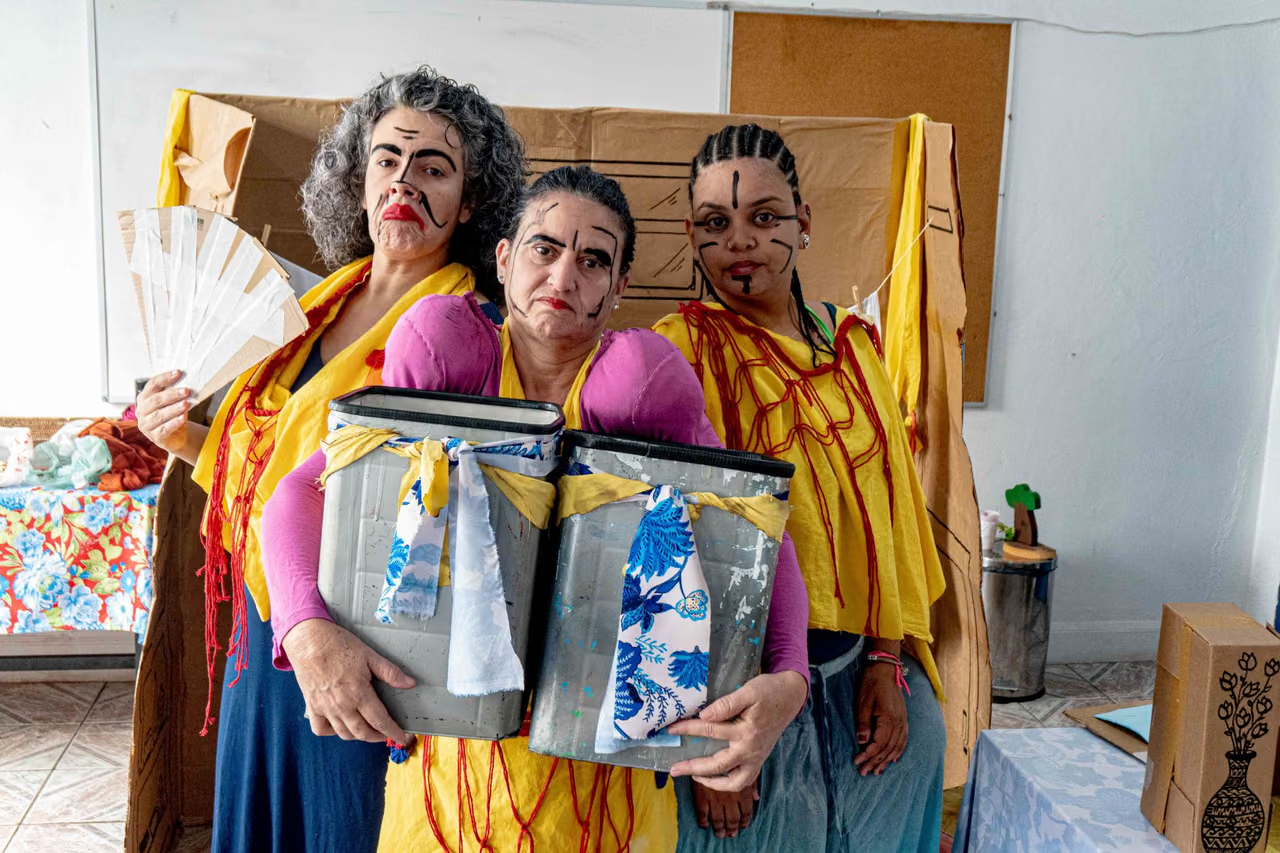
Vulcana Collective Rehearsal - approved in the 1st Call for Proposals of the Fundo de Cidadania Ativa 2026
Sources: