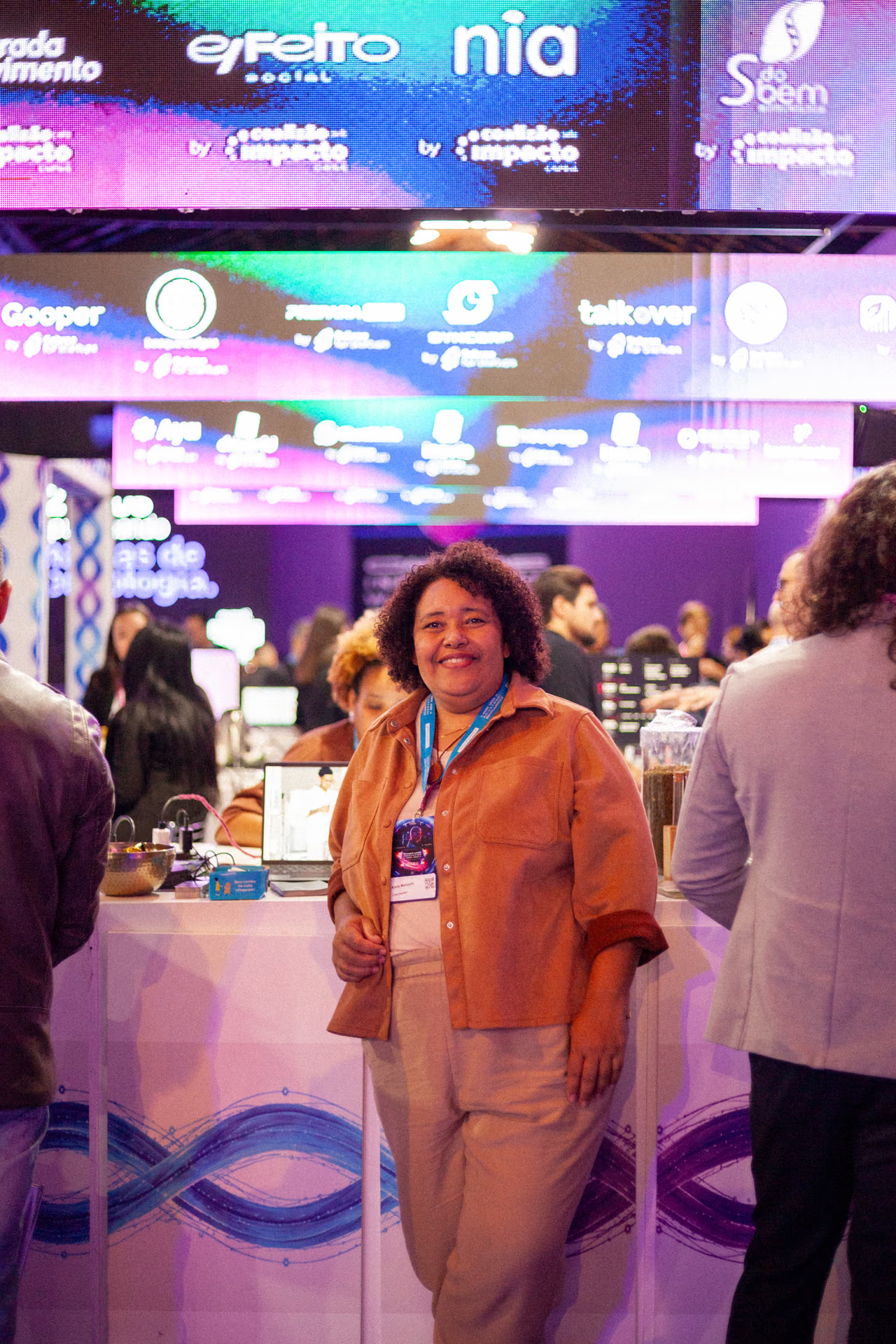
The Self-Knowledge in Practice project was born from a deeply personal experience of Karla Alexandra Marques. Before even thinking about a methodology, classes or a social project, she was simply trying to understand what was happening to herself.
During a period of depression, Karla felt that the answers she found were not enough to help her grasp the emotional dimensions of that moment. It was then that she began seeking out other forms of training, including a postgraduate degree in Neuro-Linguistic Programming, alongside studies in open therapy and philosophical anthropology.
This search began as an attempt to understand herself, but it soon took on another dimension.
“I went looking and, at a certain point, I reached the conclusion that this wasn’t just for me alone. How could I help other women go through that?”
It was from this question that a proposal began to take shape: sharing knowledge with people who would hardly ever have access to this type of training.
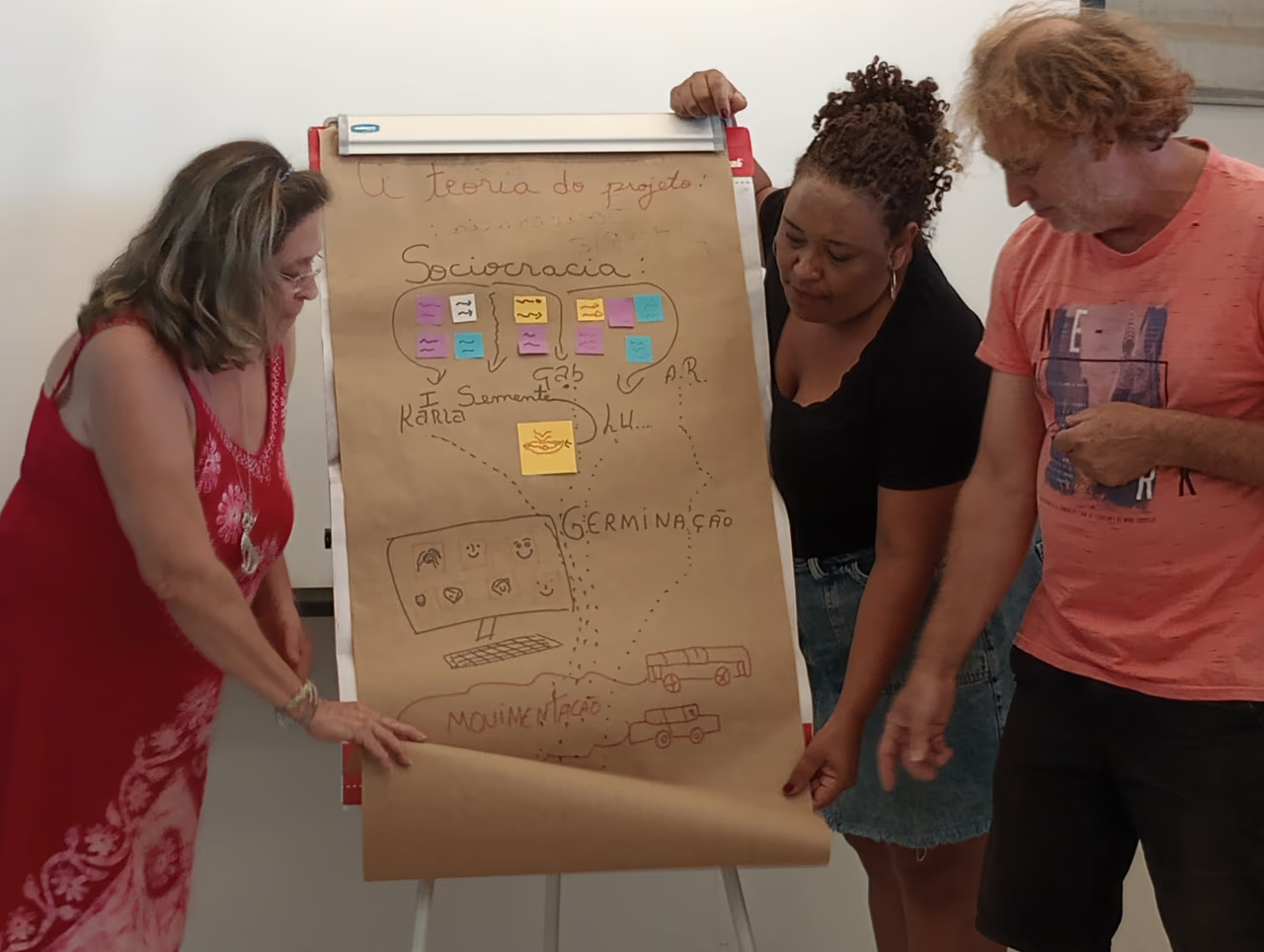
When access to knowledge is also a matter of territory
Right from the start, Karla had a clear idea of who she wanted to reach.
The courses and training programmes she took were expensive. When she began supervised counselling, she realised that many women from the periphery simply could not access that kind of care. For her, this barrier appears very concretely in everyday life.
“If a woman has to choose between buying rice, buying milk and therapy, she’s going to choose to buy that milk and buy that rice, because she is always taking care of others.”
This reflection on the care economy was crucial in defining the audience Karla wanted to reach. She started out mainly counselling Black women from the periphery and noticed that many discussions about self-knowledge, boundaries, emotions and personal development rarely reached these spaces.
From then on, the first talks began. Karla gathered various tools she had learned and sought to translate them into language closer to people’s realities. The challenge was not just sharing knowledge, but making it comprehensible, useful and applicable to everyday life.
Campo Grande: the territory that opened its doors
The choice of the Campo Grande district to develop the project was no accident.
Karla’s relationship with the territory began over 20 years ago when she arrived in Campinas. After a brief period in the central region, she went to live in Valença, in Campo Grande. At that time, she was also carrying out grassroots work in Campo Belo as a local development and solidarity economy agent.
Over time, this relationship deepened. Her first clients were largely women from Campo Grande. It was also within the territory that she found spaces to hold talks and activities on self-knowledge.
“Campo Grande was the first territory that opened its doors to host my talks about self-knowledge.”
This relationship helps explain why the first cycle of Self-Knowledge in Practice was held right there.
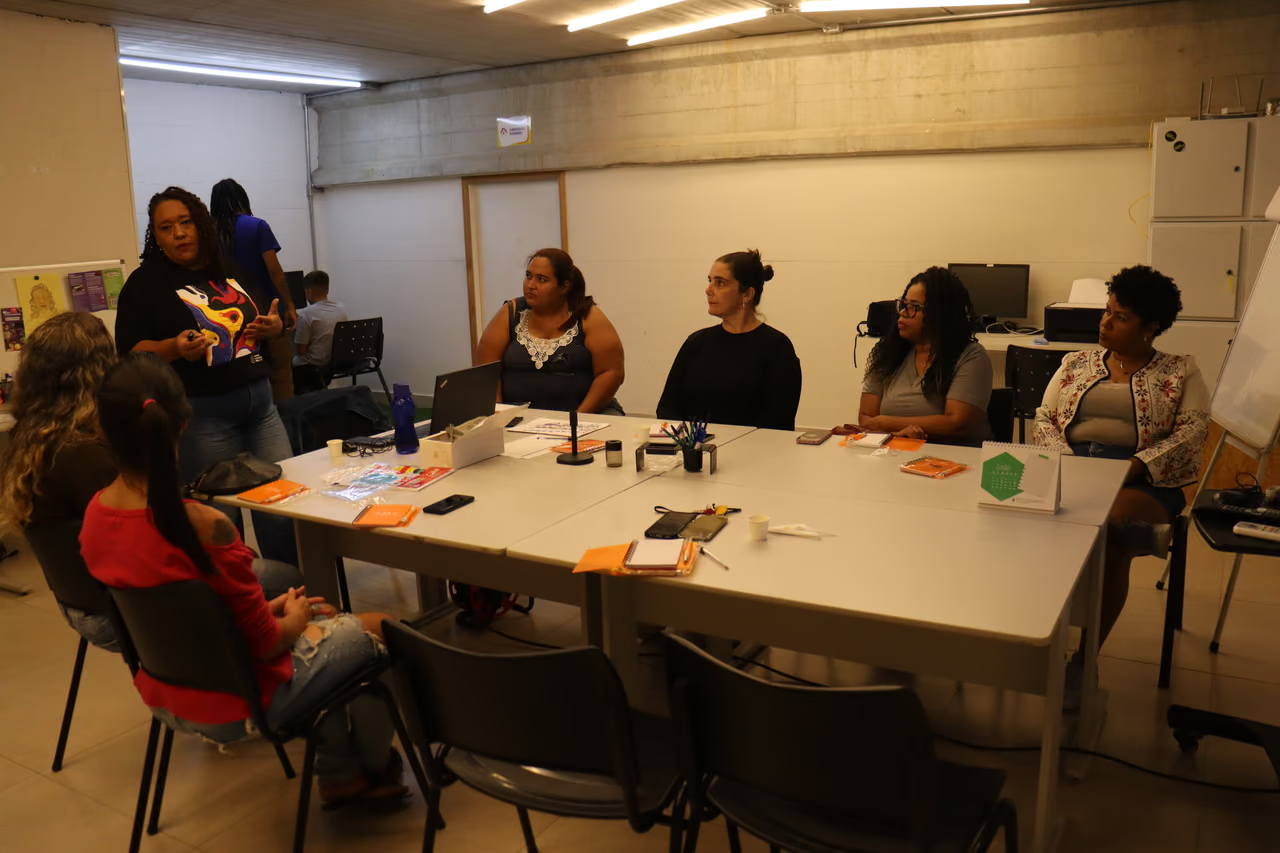
From a talk to building her own methodology
Karla’s initial activities were talks. The shift began when she took part in PerifaImpacto, where she started to view that work also as an impact business opportunity. Until then, social work had mostly appeared to her as volunteer work. Later, her participation in the training tracks at the Hub Quebrada em Movimento helped her better organise what she was already doing.
“In the training tracks, I started to understand my business as an impact business, I began to see it as a project. And that’s when I developed the Self-Knowledge in Practice methodology.”
The methodology brought together knowledge from Neuro-Linguistic Programming, people management, philosophical anthropology and open therapy, organised to help each participant reflect on personality, values, principles, boundaries and learning styles.
The differentiator lay precisely in the practice. It was not a therapeutic process, but rather a training programme capable of offering tools so that each person could observe themselves and apply these learnings to concrete everyday situations.
Fundo da Quebrada as a space for experimentation
After going through the training tracks, Karla structured the project and applied for the Campo Grande call for proposals. With support from Fundo da Quebrada, she managed to run the first pilot of the methodology right inside the Hub Quebrada em Movimento.
“I ran the first pilot right there inside the Hub Quebrada em Movimento, with the support of the call for proposals. It goes really well. We see that it is indeed possible to run it. And that’s how we validate the work.”
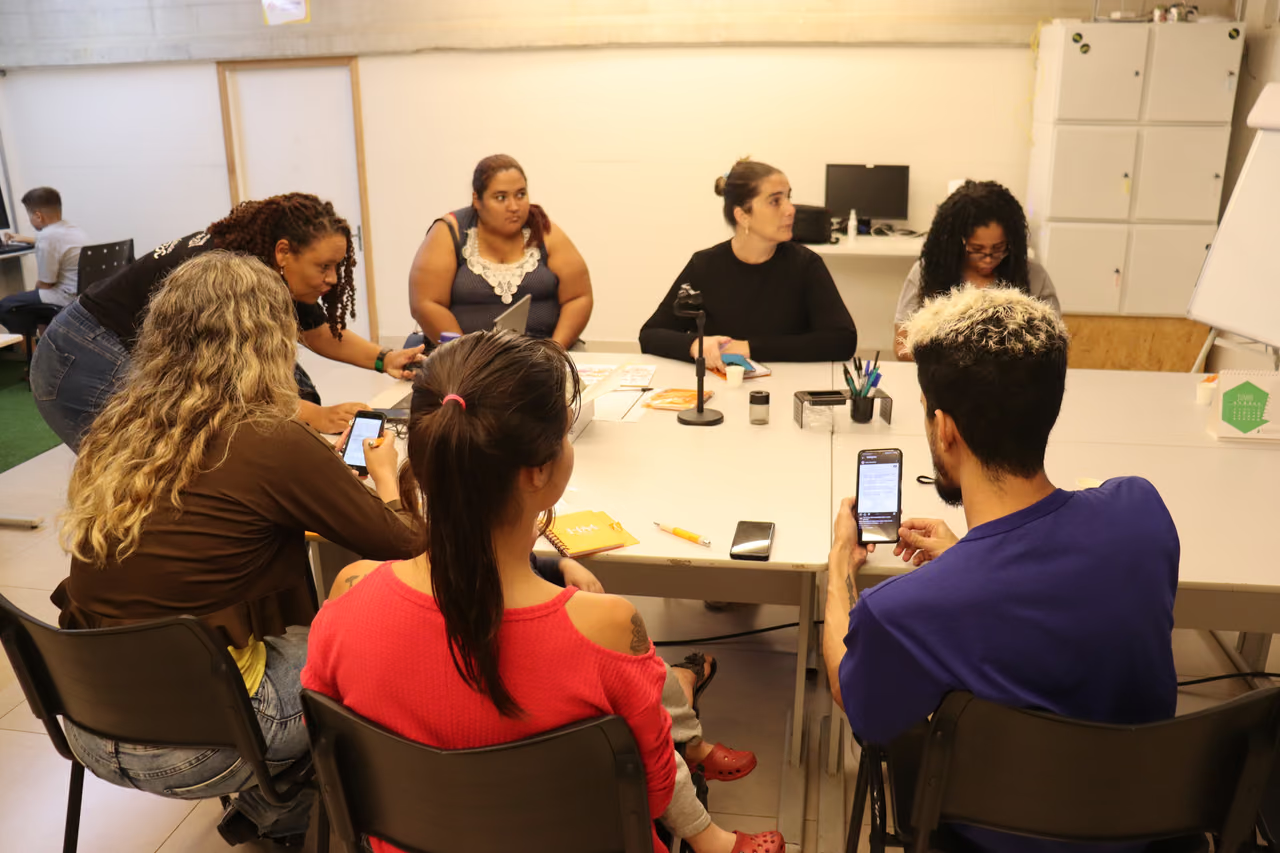
The project delivered the four planned classes. Physical and digital tools were used, such as paper, pens, notebooks, presentations, QR codes and word clouds, aiming to cater to different learning styles. The report also records active participation from the group during the sessions.
More than just funding an activity, the fund allowed them to test a methodology that had previously only existed as a work in progress. This type of support creates an important stepping stone for territorial initiatives: the possibility of putting an idea into practice, observing how it works, evaluating results and identifying what needs adjusting.
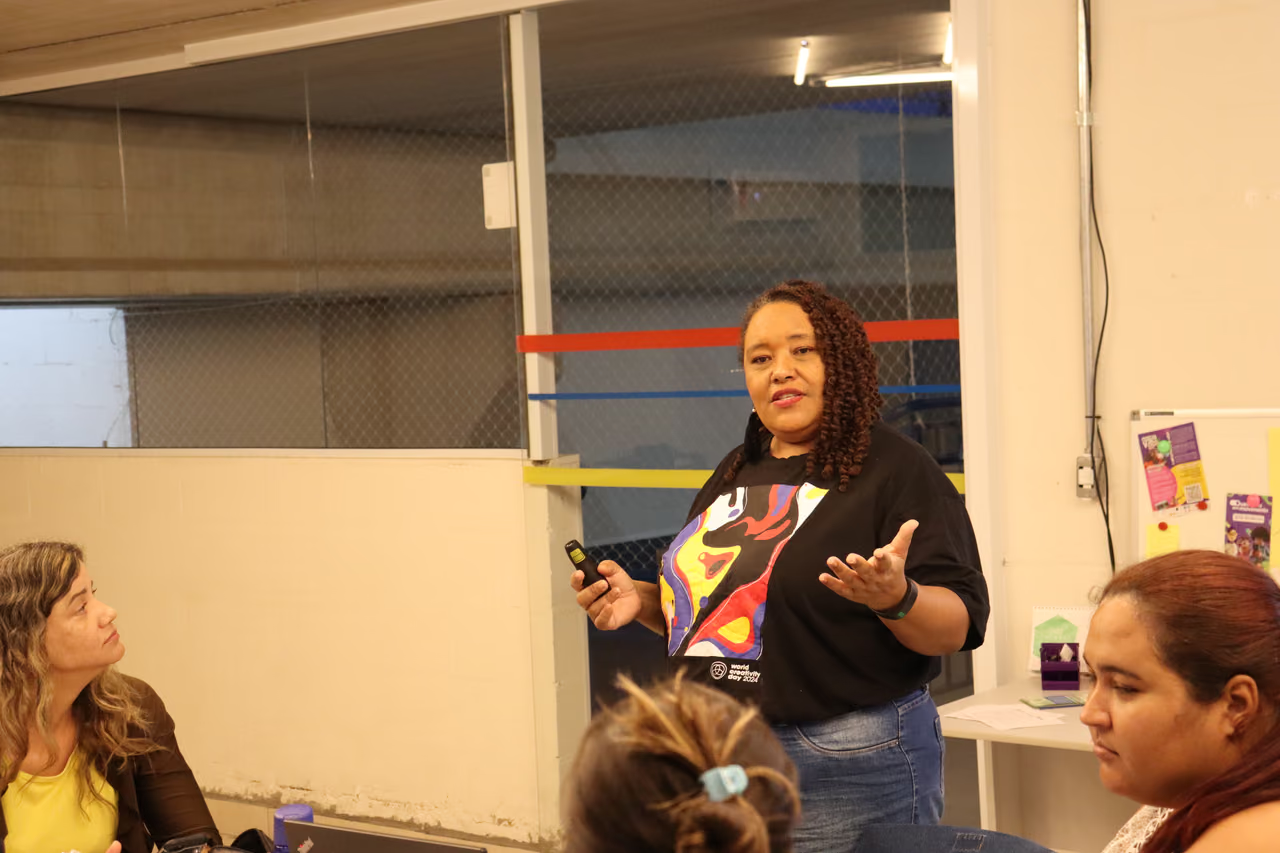
The methodology combined moments of conversation, writing, individual reflection, visual activities and practical dynamics.
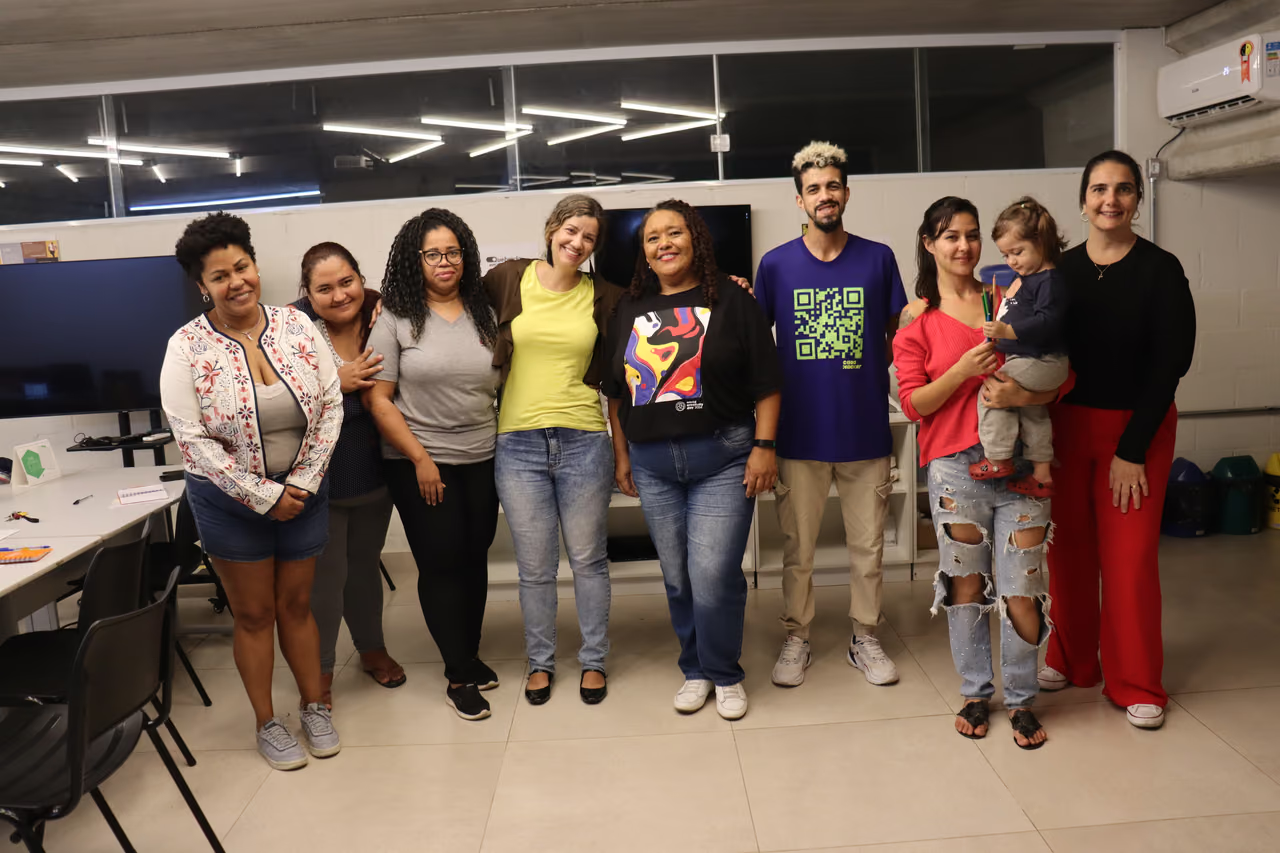
The report’s photos show participants gathered around tables, interacting during exercises and sharing moments of collective construction throughout the four classes.
For Karla, understanding how each person learns is also part of the self-knowledge process.
“We bring the course so that individuals can understand themselves in their essence, what their best learning style is, whether they are visual, kinaesthetic or auditory.”
She also noticed that some tools went beyond the individual experience. Participating mothers began to observe differently how their children learned and were able to take some of those references back home.
What the evaluations showed
At the end of the course, evaluations pointed to positive changes in the participants’ self-perception.
Reports indicated increased self-confidence, greater decision-making capacity and more clarity in facing everyday situations. Improvements were also noted in the ability to recognise emotions and better understand the relationship between behaviours and environment.
Another important outcome appeared in the way people began to observe their own choices.
Evaluations indicated a greater awareness of behaviours previously carried out automatically and a tendency to make decisions more consciously.
All participants who answered the evaluation expressed interest in a second stage of the training, and the majority gave the course the highest rating.
These results helped confirm something Karla had already noticed during her own journey: when this type of knowledge is translated into accessible language, it can become a concrete tool for transformation.
Challenges also helped redesign the project
The experience also brought important lessons for future editions.
Communication had a lower reach than expected. Although outreach took place via Instagram, LinkedIn, WhatsApp and flyers distributed in Campo Grande, the number of registrations fell below initial expectations.
Another point noticed during implementation was the need to offer support for people with children. The absence of someone responsible for childcare hindered the participation of some members. This same issue came up later in the evaluations, with suggestions to offer childcare for children in future cohorts.
Suggestions also arose such as creating a WhatsApp group among participants, holding more collective activities and making the materials used during classes available.
This feedback became part of the methodology’s ongoing evolution.
From beneficiary to project manager
Self-Knowledge in Practice represents just one stage of a longer journey.
Karla has gone through experiences in social movements, the corporate world, human development training and programmes such as PerifaImpacto, the training tracks and other processes within Quebrada em Movimento.
For many years, she did not recognise her social work as something that could also be paid.
This perception was tied to her own family history. Karla grew up in a peripheral family where helping other people was part of daily life. She remembers her grandmother sharing food with those seeking help at the end of the market, her uncles donating blood and her mother working in social assistance and community care actions.
For a long time, this reference made social work and volunteering seem almost inseparable.
The change happened gradually.
“Everything is a journey. I needed to go through the journeys to understand my business, to understand that I was making an impact. Then, to understand that a social project can be a socio-environmental impact business. Then, to understand that I can be paid for this.”
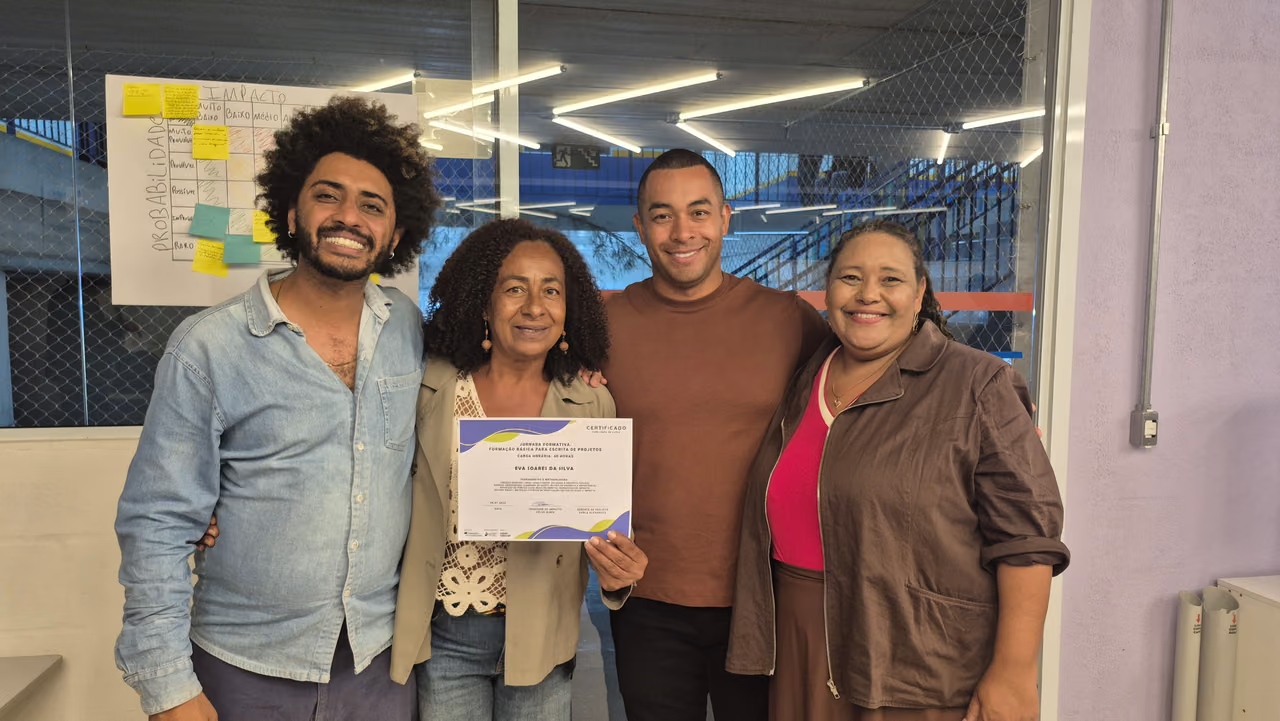
Today, Karla holds a different position in this same ecosystem. After going through processes as a beneficiary, developing her own methodology, securing funding and executing a project, she has started working professionally in project management within the Hub Quebrada em Movimento.
The experience she accumulated in the corporate world, especially in people management and leadership, began to converse with the path built in the third sector.
When a journey also becomes a reference
For Karla, making her journey visible also took on a new meaning. For a long time, she felt uncomfortable when someone said she was a reference point. Until a conversation made her look at it differently.
“People need to see that it’s possible so that they want to be there too.”
Her own experience then began to function as a possibility of identification for other women.
“If I managed to do all this with three young children, living in a periphery, living in the territory, being a Black woman, it is indeed possible for other people to succeed.”
This is perhaps one of the most important dimensions of this journey. It is not just about an individual professional shift, but about making visible a possible path for other people who are already active in their territories, possess recognised knowledge and leadership, but do not yet see social work as a professional possibility.
Knowledge that circulates
There is an idea that runs through Karla’s entire story: knowledge should not stop with those who had the opportunity to access it.
“Knowledge, to me, is meant to be shared. I need to pass on what I learn to those who come next.”
This logic helps connect different moments of her journey.
She sought knowledge to understand her own experience. Then she began sharing it with other women. She turned this repertoire into talks, structured a methodology, tested the project with support from Fundo da Quebrada and, later, began using her experience to mentor other leaders and initiatives.
Self-Knowledge in Practice is, therefore, more than a four-session course. It represents a moment where personal journey, technical knowledge, territory, training and the opportunity to experiment with an idea all came together.
And this process continues.
Karla’s next step is to keep learning, deepen her relationship with academia and bring the knowledge produced in those spaces even closer to the experiences built in the territories.
“My goal now is to bring the territory inside academia. And to keep doing my management work, because I am passionate about impact business. Helping people transform their realities is gratifying.”