
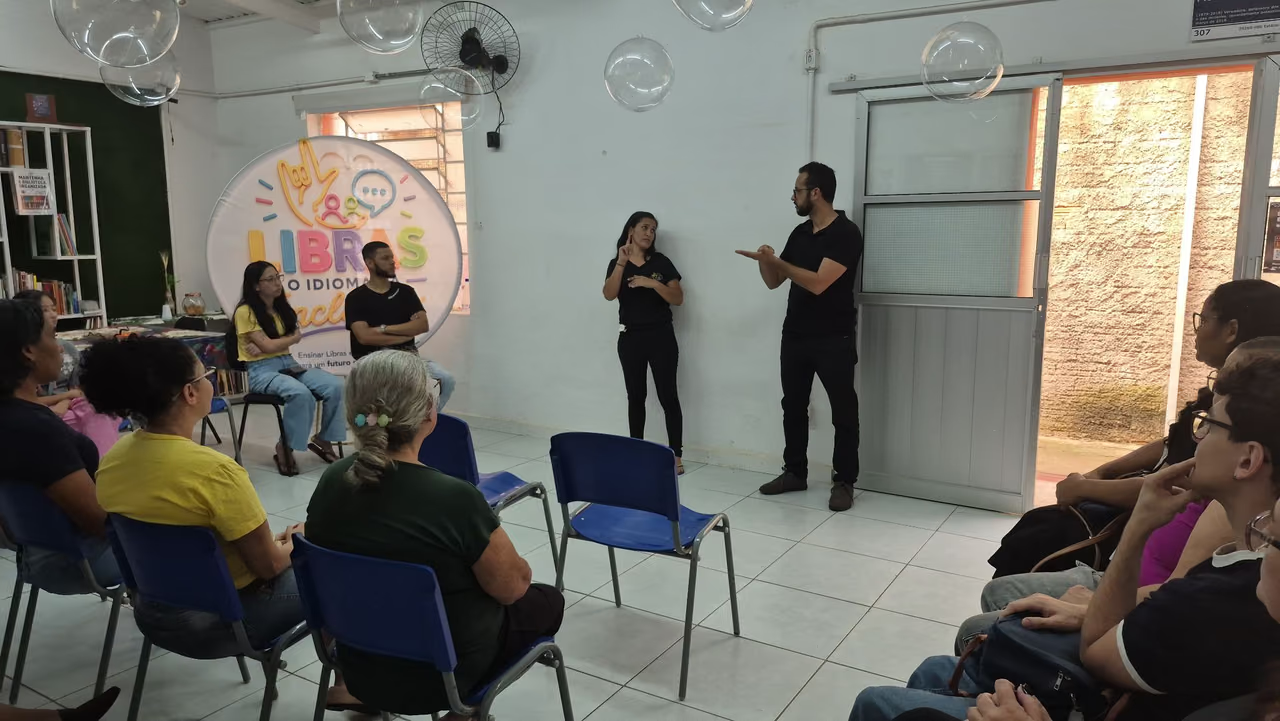
 Janaína, project leadership, collaborators, and students during a Libras class.
The project Libras, o idioma da inclusão was supported by Hub Quebrada em Movimento through the Active Citizenship Fund Call for Proposals, for the Campo Grande territory. The leader, Janaína Oliveira, brought the basic teaching of sign language to her classes, along with interpreters and speakers, holding 4 meetings on Fridays—August 21 and 28, and September 4 and 11—at Casa de Cultura Itajaí.
Janaína is an educator, holds a postgraduate degree in Libras, and is currently pursuing her second undergraduate degree in Letras-Libras. She created the project with the intention of teaching and encouraging people from the periphery to learn sign language, as well as making more friends for her deaf daughter, promoting inclusion in the Campo Grande territory.
A few months earlier, Janaína participated in the Training Journey: Basic Training for Project Writing, a course held by Hub Quebrada em Movimento in the Campo Grande territory. With in-person classes at its physical space, located at Casa dos Anjos, Jardim Liliza, practical tools were taught to bring ideas off the paper, covering planning, organization, and execution of proposals for calls for proposals. This training helped structure her project, which was approved under the Active Citizenship Fund Call for Proposals by Hub Quebrada em Movimento in partnership with the investor Fundação FEAC.
The classes for her Libras project concluded in September, a month marked by awareness and pride dates: 09/23 - International Day of Sign Languages and 09/26 - National Day of the Deaf. Keeping these dates in mind was very meaningful for all students and collaborators, as it was not just about a date to remember, but a practical promotion of the inclusion that everyone deserves by right.
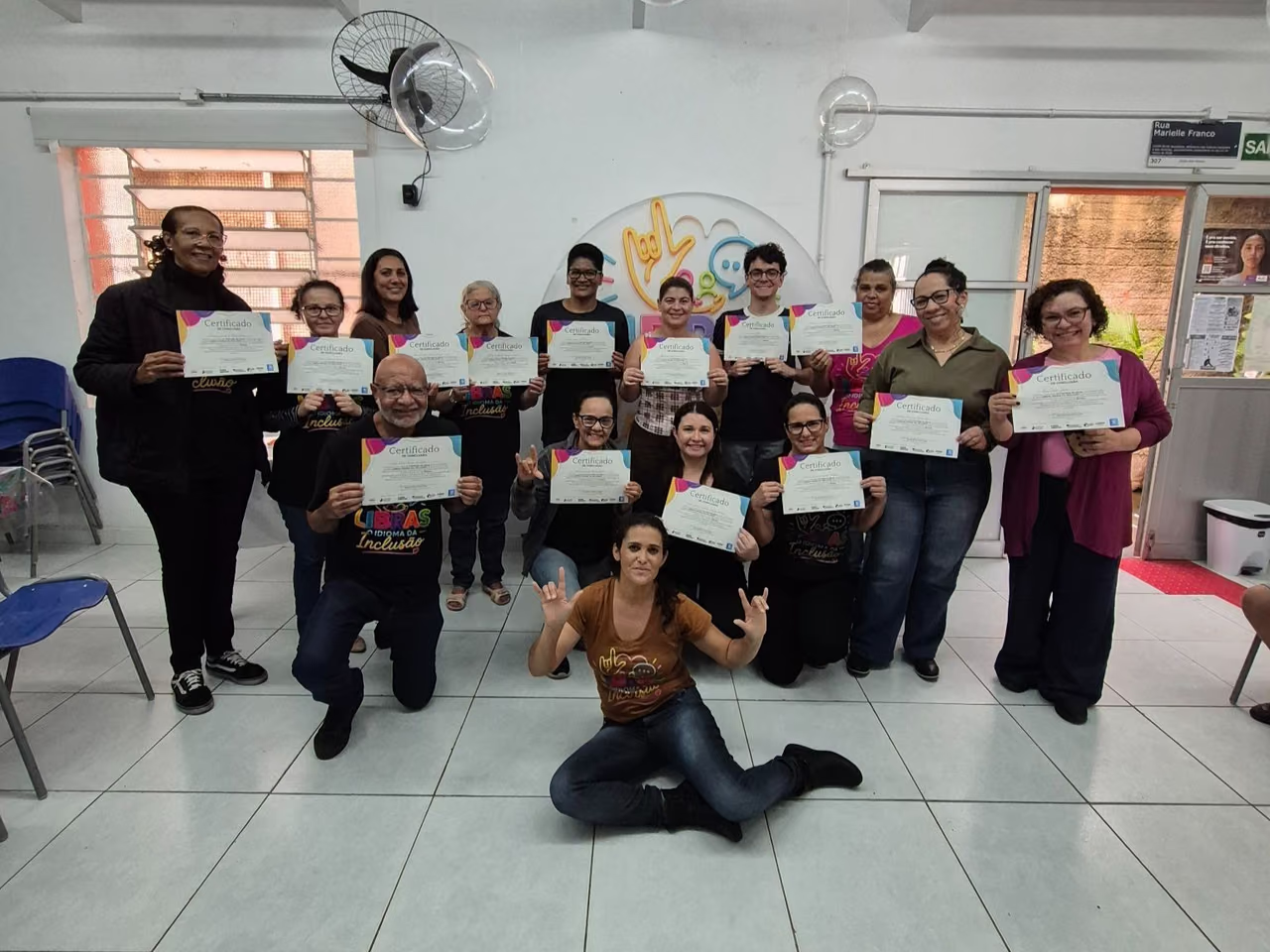 Janaína, project leadership, and students with their certificates of completion for the Libras classes.
There were testimonials from deaf guests who shared their experiences with the daily barriers faced due to the lack of interpreters in public and private places, their challenges in entering the job market, and the joy of finding people who know sign language, giving visibility to the fight for more dignity and respect for the deaf community.
When we talk about accessibility, we usually think of ramps, elevators, and inclusive technologies, but it can also manifest in the inability of a deaf resident to be understood at the health clinic, the neighborhood pharmacy, their children’s school, or local businesses. Linguistic isolation imposes invisible, yet extremely painful, barriers.
Knowing that the cost of private lessons is a highly exclusionary factor for the working-class and peripheral population, the project guaranteed a free, welcoming space of extremely high technical and human quality to learn a new language for free.
Hub Quebrada em Movimento, by supporting this project, promoted inclusion for the periphery of the territory. Connecting people, breaking down barriers, and being a bridge for the community is the main factor that makes the Hub exist and remain an open space for everyone.
Perspectives of the Hub Quebrada em Movimento communicator while following the initiative
Having closely followed the project to capture audiovisual records of the initiative allowed me to be present during moments of learning. I became part of the student body in my willingness to learn and dive deeper into the Libras language.
I understood more about the power of communication, which is meant to bring people closer, and if someone is not being included in it, it loses its true purpose. This made me reflect on everyday actions that could be different if we could all communicate on the same wavelength.
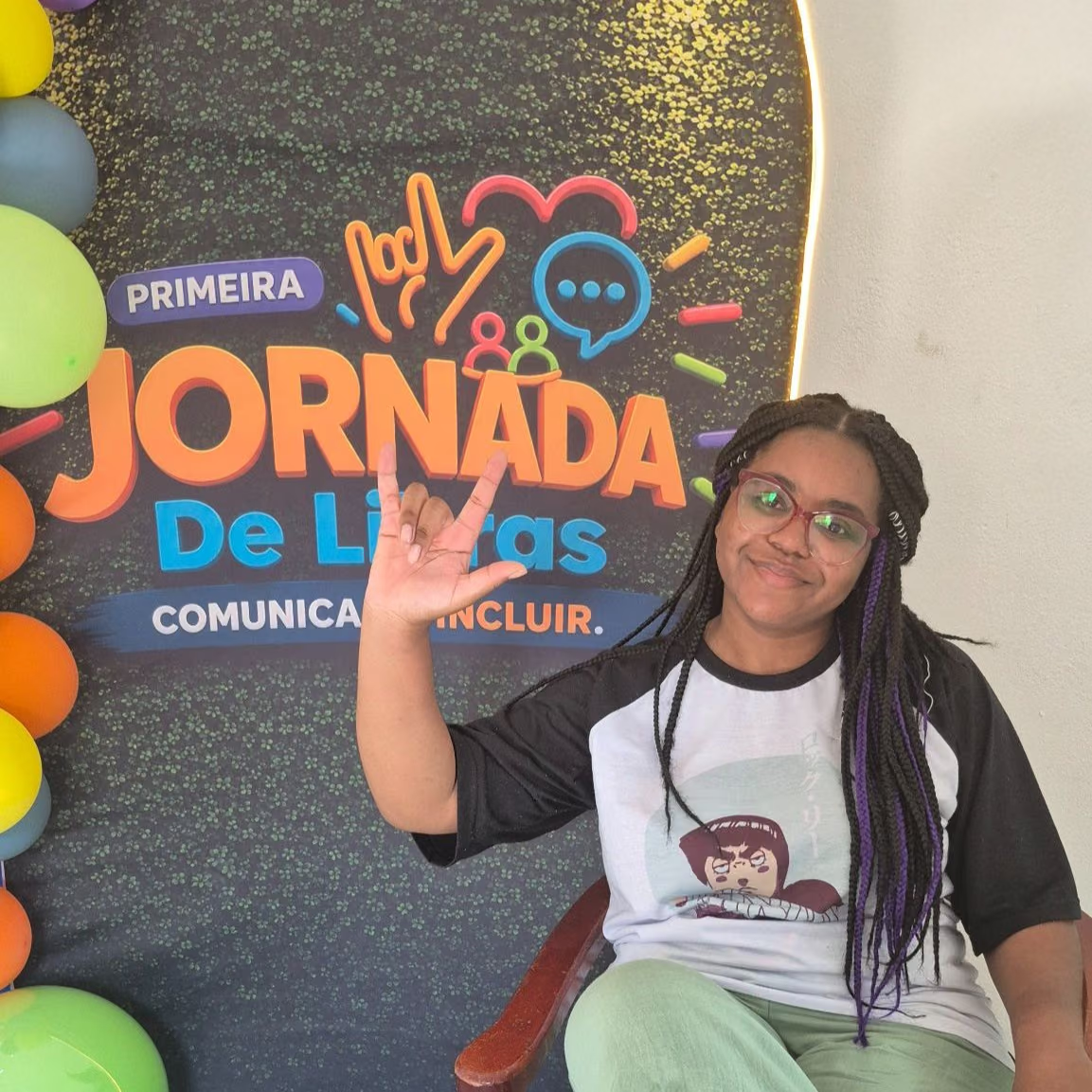 Helen, communication assistant at Hub Quebrada em Movimento, during the Libras initiative.
I was impacted by the project to the point of remembering that I have a course on Libras at college which I could have already read, but left for later because it wasn’t mandatory. But why wasn’t this course mandatory like the other subjects? I left it to read when I had time, but while recording the testimonials I understood that the time is now, because the people who need to be included in a conversation circle cannot wait until we have more free time to include them.
I understood that we can open up the spaces we wish existed starting from ourselves through language, giving visibility to everyone and respecting their individualities, being the very builders of the bridge to inclusion.
Hub Quebrada em Movimento, by supporting this project in the Campo Grande territory, enabled an impact of empathy, reflection, and learning for all students, collaborators, and for me, Helen, the Hub’s communication assistant.